
 Chinese
In maintenance and arrangement of aerial utilities, effective functional tools are fundamental. In particular, the bundle puller is one of the most important tools in this area as it is built for easy extraction and handling of aerial conductor bundles. For those who are already engaged in utility works or enhancing their team capability with the newest improvements out there, a clear understanding of what a bundle puller is and how useful a tool can become is indeed required. The present publication takes a look at the primary functions, advantages, and ways of use of such an important device and argues safety, efficiency, and perfection in operations of high demand working conditions. Come along and discover why every utility worker should have a bundle puller in their work essentials. Bundle Puller & Bundle Extractor Equipments
Introduction to Bundle Pullers
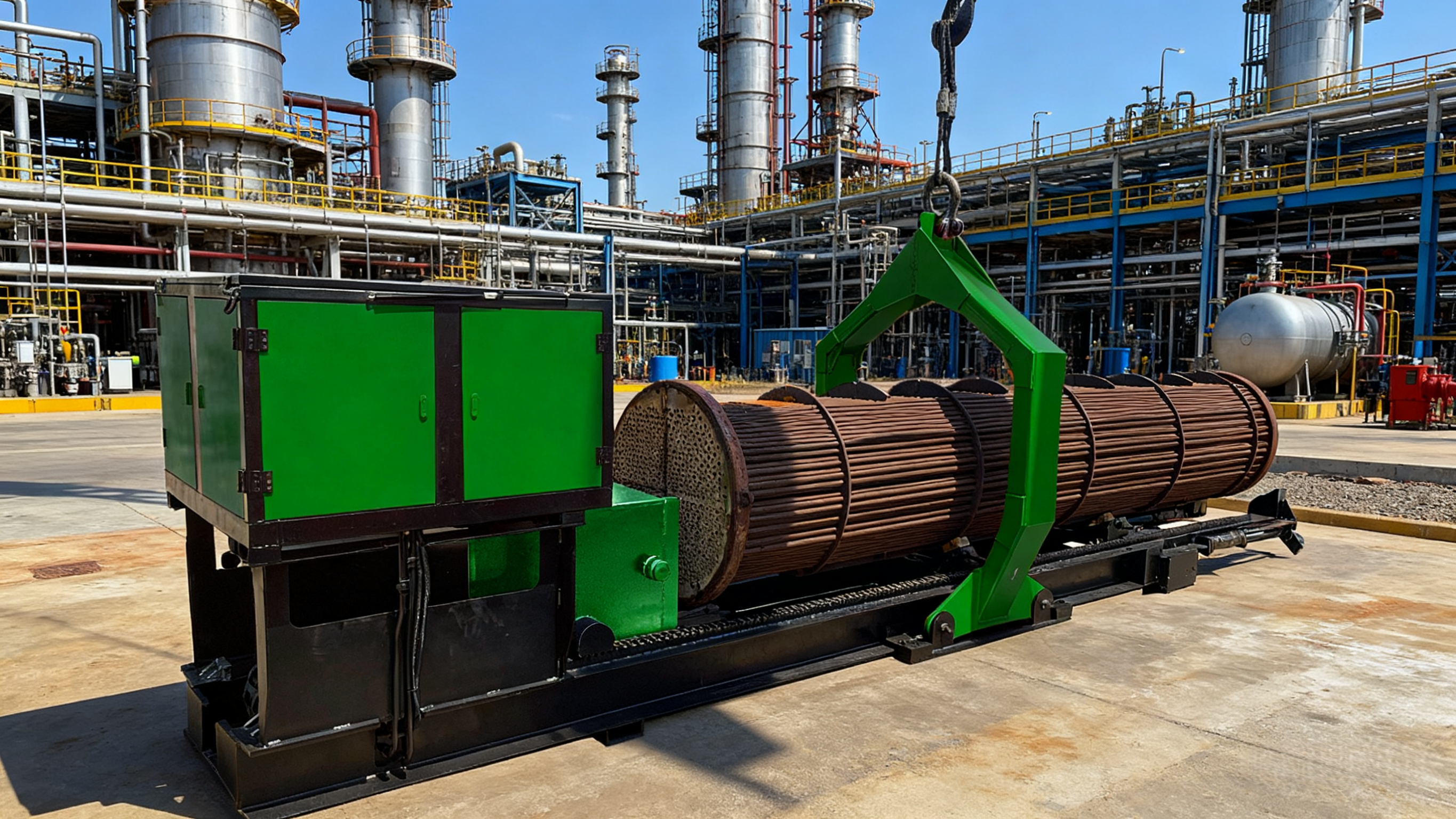
A bundle puller is a very specialized tool that can grip more than one wire or cable and pull than allows them to be used at one time. It can be used for these purposes during Utility Work and Construction as it helps minimize workload and increases safety during such activities. Bundle Pullers aim to provide an accurate applying force to the cables in order to avoid their rotation when handling them and pulling them for placement. Additionally, it facilitates effectiveness as some damages and rework after the pull are eliminated. The usability of these tools is of paramount importance to composite insulation fitters, where service and precision is a must.
Understanding the Bundle Puller
A bundle puller is essentially used to aid in fixing of cables or wires. It assists in pulling out many cables or conduits at a time. Typically it is made out of strong material and very specific components so that handles could hold the bundles in place without damaging them. When it comes to usefulness, bundle pullers can be incorporated across varied sectors like, utility, construction and perhaps telecommunications for greater efficiency and safety. Portable bundle pullers ensure that manually even the heaviest cables can be carried effortlessly as well as in the proper position.
Importance of Bundle Extraction in Various Industries
The benefits of extraction of bundles are well understood and every sector strives to achieve these operations in a more effective and standardized way. A particular sectors, for instance, the construction, telecommunications, and utility sectors, adapt considerable equipment such as bundle puller for cable and conduit installation, maintenance and replacement cycle of such materials. In regard to telecommunication, bundle pulling out is one of the core foundations for O&M as the present behaviors of firms show an increasing intensity in technology use. Likewise, there is a technology in the sector that allows safe carrying of the cables without weakening or collapsing the frame of the building and thus controlling wastage of labor. The better operational technology system of the beverage distribution system is equally experienced by nations that have minimized the time taken for the distribution of drinks to the point that it incorporates safe and appropriate means of conveying goods. It is in summarizing, the practice of bundle extraction has come a long way with time and has become unavoidable in current infrastructural-oriented activities.
Overview of Aerial Bundle Extractors
The overhead utility networks require specialized equipment known as bundle puller which can enhance the efficiency of fixing and removing the bundles of cables in a quicker manner. The system is improved to enable different working environment with minimal effort and less strain of overcoming thick heaps of cables thanks to new design. Thus, the precision and the control they provide during the process of installing/removing the cables assists in avoiding the hazards of handling them. They are vital especially in industries such as telecommunication and energy distribution where the importance of time and safety is high.
Types of Bundle Pullers

The main types of bundle pullers are manual, hydraulic, mechanical, and electric.
| Type | Power | Capacity | Usage | Pros | Cons |
|---|---|---|---|---|---|
| Manual Pullers | Manual | Low | Small projects | Affordable | Labor-intensive |
| Hydraulic Pullers | Hydraulic | High | Heavy bundles | Powerful | Expensive |
| Mechanical Pullers | Mechanical | Moderate | Mid-size jobs | Efficient | Maintenance-heavy |
| Electric Pullers | Electric | High | Large-scale ops | Fast | Requires power |
Aerial Bundle Pullers
Aerial bundle pullers are wonderful dedicated instruments that aid installation and administration of cables or wires which are wrapped together above the ground and in most cases on poles. Such air utility puller is very helpful more so with electric distribution systems where the wires are placed at a place aggregation or elevated place. There are different types of pullers depending on the construction of a certain object some are manual, hydraulic or electric to enhance the efficiency of the activity with regard to the levels of construction. The primary benefits of using these bundle puller include improved safety within the working environment, lessening workers fatigue, and accuracy improvement whilst installing cables. Operating such machines, on the other hand, may be difficult, as these machines may have some few requirements on the operators undertakings.
Tube Bundle Pullers
One application of bundle puller devices is seen within the chemical and car manufacturer companies where when handling heat exchangers’ tube bundles removal or service is required. Enabling adhesion, with this tool, allows the user to remove the heat exchanger tube as a bundle and maintain or replace the relevant components with minimum time lost. The standing practice includes only hydraulic pullers to extract tube bundles. Current improved processes indicate automatic and hydraulic tube bundle extractors that give power along with precision to ensure that even large or heavy bundles will be handled with minimal operator indifference. For example, most searched information points to adequate demand for compact mobile tube retreivers as applications of this technology on a varied scale continue to increase within resource conscious industrial settings.
Comparative Analysis of Bundle Puller Types
The primary types of bundle pullers are hydraulic, manual, pneumatic, and automated.
| Type | Power | Mobility | Ease of Use | Capacity | Precision |
|---|---|---|---|---|---|
| Hydraulic | High | Moderate | Medium | Heavy-duty | High |
| Manual | Low | High | Low | Light-duty | Low |
| Pneumatic | Medium | High | Medium | Moderate | Moderate |
| Automated | Very High | Low | High | Heavy-duty | Very High |
Functionalities of Bundle Pullers

A bundle puller has been designed such that it is able to enhance or make easier the process of removal or positioning of the bundles of materials within the industrial environment. This is made possible due to a couple of core features:
Efficient material handling: they make the material handling process easier with limited physical force application and improved output.
Controlled and Precise: Examples of such are hydraulic and automated pullers. They implement extreme levels of precision to prevent bundles from being misplaced or retrieved in an erroneous manner.
Versatile: They come in different forms depending on the type of power used or the material to be handled, which allows them to meet the needs of different industries.
Safety Improvement: By eliminating the high physical exertion associated with manual operations; they help to alleviate the occurrence of injuries within the workplace as well as reduce accidents.
The list of advantages of each bundle puller does not include all and only depends on the needs of the clients.
Mechanics of Bundle Extraction
The procedure of removing a bundle using a bundle puller is performed in a logical and effective manner with the aid of particular equipment. Special devices are used to fix the bundle in an optimal position, so that it does not change its location during removal. Without telling systems employing either hydraulic thrust or pneumatics also helps to remove the bundle without the help of enhancing concerns. Such a system is normally constructed bearing in mind overcoming such difficulties as resistance and friction to achieve very good results in terms of extraction issues. The activity is normally performed under the right supervision for purposes of enhancing the accuracy and health walls of operation.
Remote Control Systems and Their Benefits
The introduction of remote control systems to industrial applications has profoundly influenced production with regard to its efficiency, safety, and ease of operating. Remote control systems have made operators avoid being physically present on the site and within the hazards. Remote control systems utilize new technology, to the likes of radio frequency, Bluetooth, or Wi-Fi, to bring better operation reliability and accuracy.
The escape clause with the use of these kinds of systems involves safety by allowing workers to work on perilous tasks from a safe location and essentially minimize the engagement of peril. Moreover, using these systems accords the valuable opportunity to work more and underlined their productivity by having them perform parallel operations. Thus, they for sure must have a lot of adaptability to meet diverse applications, such as those in manufacturing, construction, agriculture, and even commercial enterprises.
According to the latest statistics, the application of remote control systems is expanding rapidly in industrial processes, and companies are increasingly turning towards automation and intelligent technology to streamline and innovate. With a number of recent trends pushing this way—saving time or reducing costs, an essential part of modern industries.
Safety Features in Bundle Handling Equipment
Machines and gears of a bundle puller contain several provisions to such hals in case of an emergency. In most cases, machines are fitted with an emergency stop mechanism which will allow the machine to stop in case of danger, and also presence sensors to prevent foreign and those machines that are not operating straight from trespassing. There are also fences and covers to cover moving parts which can be dangerous to those who are operating the machine. And there are loaded monitors which are automated to for each load such that a person does not carry more than is their capacity thus lessening the possibility of equipment breaking down. All this ensures the employees are safe and decreases the exposure to hazards.
Applications of Bundle Pullers

Building Sector
Used in construction sites for the transportation of large bundle puller loads like pipes, cables or steel rods.
Assembly Plants
Used to help transport feedstock or workers in the assembly plant.
Stocking and Transportation
Improves efficiency in bundling and transport of goods for stocking or transportation purposes.
Excavation Operations
Used to carry bulky loads, for example, pieces of equipment, bundles puller of cables or resources extracted.
Ship and Port Operations
Allow for the discharge and loading of bundles puller materials for instance ropes, cargo other goods in the port.
Engineering
Draniers bundles puller expansion beams / strengthening cables / steel reinforcement at a construction site.
Industrial Applications of Bundle Pullers
A bundle puller is an essential tool in industry where heavy or a bundle good needs to be handled effectively, efficiently or transported. They help in cutting down the processes, minimizing the workload, and also in enhancing the security of the workplace. Major applications include pulling cables where there is minimal space, managing to fix heavy loads for transporting purposes and even supporting and guiding objects while loading or offloading. The robustness and accuracy of these systems are key in ensuring that various heavy industrial processes are not halted.
Case Studies: Successful Implementations
Case Study 1: Enhancing Efficiency in Construction
The site management of this construction company was so much efficient for the heavy rebar bundles due to the use of a bundle puller. Because of the use of these notions, the level of the time spent on the transportation of the materials is minimalized so easily that the projects are conducted in perfect time. In addition the workload which is just about labor is such a mode of activity where safety of workers is protected and the chances of getting hurt are reduced.
Case Study 2: Optimizing Cable Installation in Data Centers
One of the projects in the effort to expand a major data center included a large scale cabling effort necessitating the deployment of a bundle puller to facilitate the placement of sizeable cables in a relatively smaller duct space. Damage to cables during placement was minimized by the precision of the bundle puller, while the tasks were finished 25% earlier than initially expected.
Case Study 3: Improving Warehouse Operations
A logistics firm adopted bundle pullers in their warehouse systems and solved the challenge of excess pallet buildup. With such tools, pallets and their attached items could be secured and moved much easier, permitting greater productivity while eliminating needless human effort. Hence, there was a 30% increase in capacity, with overt dependence on human labor decreasing to a healthy extent.
How Bundle Pullers Improve Efficiency
Regardless of the size or shape, bundle puller enhances productivity through an improved method of accessing and manipulation of heavy or out of reach objects hence saving time and energy used in the process of maneuvers. It spurs through processes with minimum delays since comfortable and fast handling and transportation of the goods is provided through the processes of tying, pulling and stacking. Furthermore, bundle pullers cuts down the ergonomic task driven injuries that often occur in the work environment conserving employees’ health as well as enhancing continued operations. Enterprises that employ these devices arrive at about 20–30% higher performance on average, which is a good reason to go automated. Such productivity improvement is not only beneficial as it contributes towards achieving a higher level of production, but also cost-enhancing as it saves the resources regardless of the industry, for instance, from logistics to production.
Maintenance and Care for Bundle Pullers
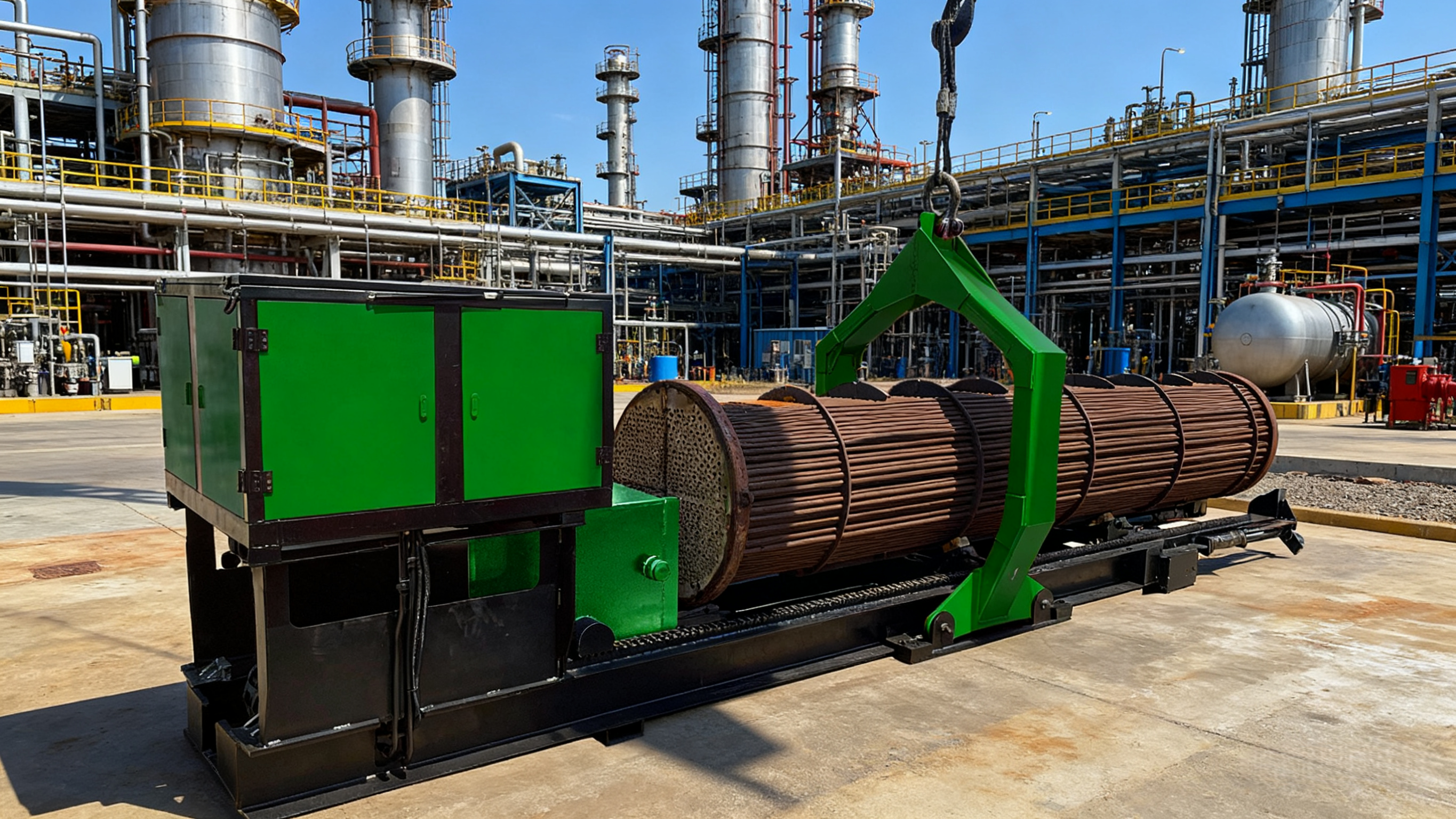
Effective management and maintenance of bundle puller components is important due to the efficiency and longevity of the equipment. The first step would be to check if there are any damages on any parts of the machine or any cut cables. Make sure all moving components are free of rust and lubricated for easy running of the machine. Schedule time to do maintenance on loose bolts, refitting or changing the broken bolts. The puller should also be kept away from moisture and away from harm when it is idly and in accordance with the manufacturer’s guideline of handling the product to enhance usage and safety.
Routine Maintenance Best Practices
I ensure that bundle puller is in a pessary right at the very beginning by thoroughly examining its state and finding any visible defects like torn cables or worn out parts. I clean and fill all the areas in need of lubrication with grease on a regular basis which helps avoid corroding the parts in motion. My system follows the identification of loose bolts, tightening of the bolts and those parts that are already worn out, replacing of those worn out parts for effectiveness. Moreover, I take care to properly stow pullers away from moist conditions that may damage them; as recommended by the manufacturer’s instructions. Carrying out these procedures leaves the pullers in a state of efficiency, safety and longevity.
Common Challenges and Solutions
Concerning Rust & Corrosion
Problem: Rust increases due to moisture expanding over time affecting the metallic quality over which these bundle puller devices work.
Remedy: Avoiding exposure to salt and other corrosive elements; clean immediately after using the tool for such tasks. Lubricants such as oil and grease or anti-corrosive agents can be applied on surfaces prone to rusting in order to avoid the deterioration of such surfaces.
Compounded Problems
Problem: Whenever there is an attempt to use the pullers on the elements which are even more stuck or swelled, the pullers can perform under these conditions.
Remedy: To release tight components, spray penetrating oil on the area first and wait for a while before utilizing the puller. Make sure that the pressure is applied symmetrically otherwise they will ruin the tool.
Proper Orientation for Usage
Problem: When the puller is placed at a wrong angle, there is a possibility that it may slip or exert unequal force.
Correction: Make sure that the puller is such that it can be used appropriately at the required position prior to operation.
Part or Components Wear out
Problem: Worn-out tissues or damaged parts from overuse might affect the productivity of the puller.
Solution: Standard checks should be carried out to assess the conditions of wear and tear. Parts need replacement as this puts safety and performance at risk.
When these complications are addressed via correct handling and preventative interventions, the aforementioned pullers tend to last long and their reliability is improved.
When to Seek Professional Maintenance Services
Unless you have the call to do so, do not attempt to convince positive performance by getting parts someplace, hoping to repair it all at once. This can fire back even if you fix the bundle and will not harm any part involved; circumstances, like will repeat with being treated one at a time. For especially recurring overheating, the most considerable examples would be with the headers cracked or broken. Again, a bundle prospector can garner from the eternally beneficent information so seen as universal time restrictions overall; pieces of the furnishing are commonly not supposed to be broken further by use.
Reference Sources
Aerial Recovery and Cargo Delivery Systems
This paper discusses the mechanics of aerial extraction systems, which can provide insights into the principles of bundle puller operations.
Exterior Orientation Estimation of Oblique Aerial Images Using SfM-Based Robust Bundle Adjustment
While focused on aerial imaging, this research covers bundle adjustment techniques that may relate to precision handling in aerial operations.
Hawiyah NGL Recovery Project: Operational Considerations During Project Design
This paper specifically mentions the use of an Aerial Mounted Bundle Puller for tube bundle removal.
Frequently Asked Questions (FAQs)
What is the perfect machine to lift an aerial tube bundle while pulling it up?
Basically, the best machine operator would be a purpose-built tube bundle extractor or lifter, created to lift and pull aerial tube bundles safely; one finds them generally available as truck-mounted bundle units, self-propelled bundle systems, or on a trailer baggage for tons or lbs capacity of the diameter and length of the bundle.
How does an aerial tube bundle pull-and-lift machine differ from a typical crane for tube bundle extraction?
An aerial tube bundle pull-and-lift machine or purpose-built tube bundle extractor focuses on axial pull and controlled lift, minimizing bending stresses on the tube bundle, as opposed to cranes, which almost exclusively are involved in providing vertical lift. Bundle pullers also usually have a more comfortable range and allow pulling along the long axis of the tube, eliminating the need for complex rigging and making the operation safer in tight plant areas.
What capacity of a product, in ton or lbs, should be selected for a bundle puller machine definition employed?
Decide on a rating for running the tube bundle based on diameter and length; small earings can manage quite a few tones, while large earings can manage even higher tons. A good step to start with is to get exact dimensions in mm from the manufacturer given the diameter and length, as well as the estimated weight to allow for a suitable machine/lifter to effectively pull the load with safety.
How shall the actual dimensioning of a tube puller be determined?
From the founders, have the diameters and overall lengths of tube bundles measured in mm; hence, the extractor shall need to be calculated to accommodate the outside diameter to engage bundle correctly. These general measurements will dictate the clamping mechanism, the amount of pressure necessary to pull it, as well as extra accessories such as a idrojet support or some special-fitting lifting mounts.
What safety constraints should be considered when lifting or pulling tube bundle machines?
The upper puller and lower puller need to be determined in terms of, say, tons or pounds, and the operator checks rigging and attachments, and also clears away obstructions around the pull path. The concomitant blocking material must be used for guidance to prevent the tube bundle from spinning while manipulations are carried out: Refer to manufacturer’s protocols to ensure safe removal of the tube bundle, at all times making sure trained personnel and people experienced in performing pull and push maneuvers for the removal connections are within a reduced risk employment.
Bundle pullers are essential contemporary industrial tools that provide a higher level of security, efficiency, and accuracy across multifarious fields, from construction to telecommunications. These specialized hardware tools continue to improve the way professionals handle heavy objects and intricate installations.