
 Chinese
Adhering to OSHA regulations is paramount to implementing safety and efficiency in industrial operations. Heat exchangers are just one example of many systems where compliance is of utmost importance. A close look at a heat exchange system reveals many complexities and many potential hazards and risk factors. And in reality, the obligation ends up even more enforcing on worker protection and support to operational integrity. This blog will look into the finer points regarding OSHA regulations as they relate to heat exchanger maintenance equipment, thereby enlightening readers on tips to maintain safety during maintenance, the best practices to follow, and the magnitude of the prevalent issues. Whether you are a plant manager, a safety officer, or a line technician, we hope to equip you with knowledge of what makes a safe and compliant environment for your work force. Let's barrel on and keep our precious technicians safe in order to really understand the friendly advice for keeping compliance.
Understanding OSHA Standards for Heat Exchanger Maintenance
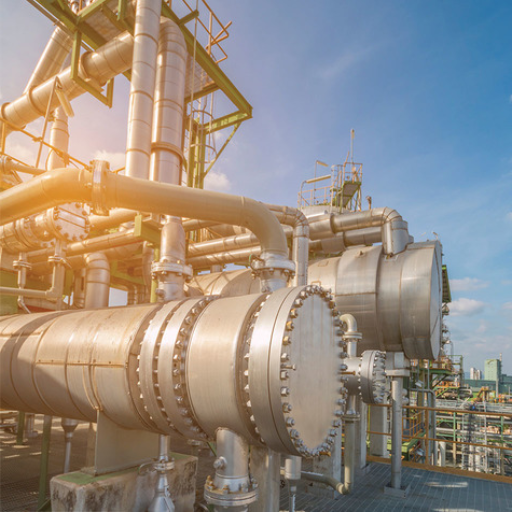
Heat exchanger maintenance related to OSHA is intended for the safety of the employees at work to prevent accidents. The major requirements are inspection of equipment, the proper training for the employees, and adherence to appropriate lockout/tagout (LOTO) procedures to prevent inadvertent lockouts. Proper personal protective equipment (PPE), which depends upon the specific need like gloves, helmets, eye protection or whatever is needed, should be made available and worn properly. Clear evidence has to be maintained according to safety documentation, maintenance, and training required for the employees, which should limit these risks by incorporating good safety measures into plant life's daily environments.
Overview of OSHA Regulations
Occupational Safety and Health Administration (OSHA) undertakes the enactment of a variety of regulations meant to establish the safe and healthy environment for working. Not all of these regulations apply to safety in workplaces. There are standards for personal protective equipment (PPE), fall protection, safety communication, machinery safety, etc. In turn, the employer, in compliance with the provisions of OSHA Working Practice Regulations, will spot and mitigate hazards in the workplace, train employees in safety, and maintain a written copy of an OSHA-compliant and documented safety record. Inspections and mandatory observance of these specifications shield employees successfully from injuries or illnesses. Reduction of safety stipulations would irritate incidents of injurious consequences to employees and owners.
Key OSHA Standards Relevant to Heat Exchangers
Permit-Required Confined Spaces (29 CFR 1910.146): Employers shall implement a program that forms the correct atmosphere testing of confined spaces, and rescue procedures for determined measures of preventing harm to employees while working with heat exchangers in the confined space environment.
Respiratory Protective Equipment (29 CFR 1910.134): It is essentially for workers when near confined spaces for heat exchangers to wear which develop argon or nitric oxide due to possible gas exposures for respiratory protection. Breatease.
Respiratory Protection (29 CFR 1910.134): Appropriate respiratory protection shall be made available to workers while they are involved in work near an heat exchanger that may release hazardous substances. Steps should be taken so that the breathing hazard is minimized.
An essential observation is that, any accidents that occur in relation to injuries and illnesses must be mentioned in Form 300A (the Summary of Occupational Illnesses and Injuries), Form 300, and Form 301 and preserved for 5 years.
The Importance of OSHA Compliance in Heat Exchanger Maintenance
Durability, thus OSHA contributions, is crucial for workers dealing with maintenance of heat exchangers. Heat exchanger functions have been under high-temperature and pressure, so mismanagement or lack of care may cause severe accidents, leaks, or harmful exposures. OSHA regulations have substantially lessened the risk of such occurrences through compliance, not only safeguarding its people but also creating a safety culture within the industrial venue.
Recent data shows that the Occupational Safety Hazards and Precautionary Measures have immensely reduced accidents at various locations. According to the U. S. Bureau of Labor Statistics, heat exchangers have seen the mentioned articles diminish significantly in terms of mechanical labor-related accidents resulting from peer compliance and negligence. This illustrates the silence of well-exercised OSHA standards.
Implementing OSHA compliance as part of everyday maintenance practices and maintaining the employee training regimen is a beneficial approach for minimizing risks, raising operational efficiency, and ensuring legal compliance. OSHA compliance is not merely for legal compliance but indeed for investing in worker safety and equipment longevity.
Inspection and Maintenance Procedures for Heat Exchangers
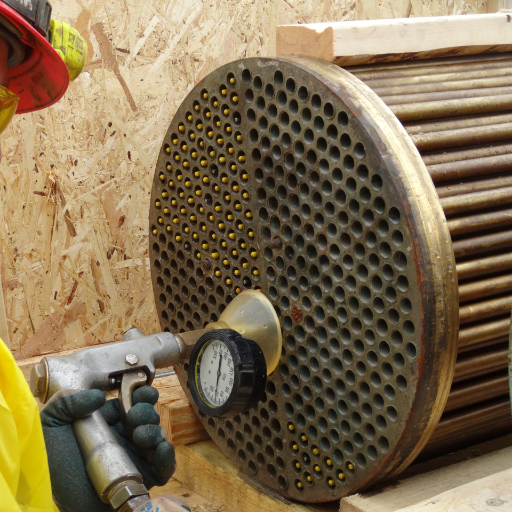
Routine Inspection Protocols
Checking the heat exchange device is important to ensure safe operation and efficiency. An overview follows:
Visual Inspection-Observing for evidence of external damage, corrosion, or heat exchanger trouble and corroded structures.
Operation-Continuously monitoring system performance, that is, pressure, temperature, and pressure drop across heat exchanger, and recording data.
Heat transfer surfaces-checking for scaling, fouling, or blockage that could impede heat transfer.
Seal integrity-looking at the condition of gaskets and strips.
Documentation - Write reports about the position of equipment. This will be a very helpful tool in seeing when maintenance, whether preventive or true, is a measure indication.
A rigorous series of tests will reduce the probability of unknown failure and extend the heat exchanger's service life.
Best Practices for Maintenance and Repair
The only efficient and effective way of maintaining and repairing heat exchangers calls for the observance of the guidelines below:
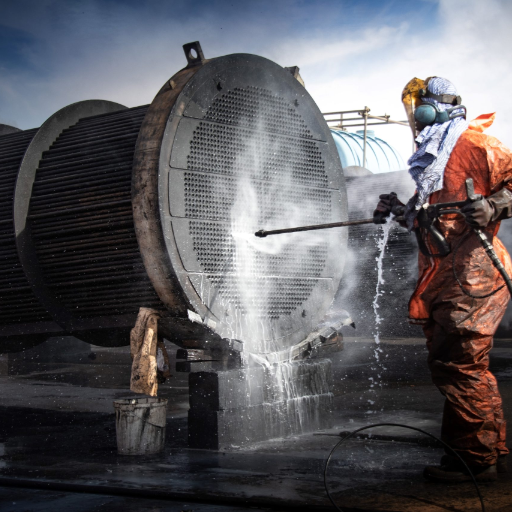
Cleaning - To prevent soiling and scaling, you need to do some cleaning, a type of cleaning such as chemical or hydroblasting, depending on the type of starters and the material of the heat exchanger.
Leaks - Checking for leaks in intervals is a needful measure to minimize seal, corrosion, or surface crack problems.
Advanced Technologies – These are extremely useful when you wish to detect early signs of blockages or corrosion-induced thinning. For instance, thermal imaging or ultrasonic testing is suggested to detect blockages.
Replace Worn Out Components – Preemotional replacement of critical components like gaskets, seals, etc., will lessen the chance of unplanned downtime.
Adjust Operating Parameters - Ensure the heat exchanger operates under the design conditions in terms of temperature, pressure, and flow to eliminate stress and wear on all components.
Accurate Documentation - Detailing maintenance schedules, findings from inspections, and corrections will assist in monitoring the evolution of performance and will plan future servicing like these.
These topmost recommendations will set your industry on the right course by almost preventing expensive repairs and replacements altogether, thereby guaranteeing a combination of efficiency and reliability for the heat exchangers through suitable maintenance protocols and proper inspection.
Documentation and Record-Keeping Requirements
The requirements for an efficient system of documentation and records maintenance related to heat exchangers also account for their effective application and compliance with industry standards.
The Maintenance Logs- Record all maintenance operations undertaken for these equipment, like cleanup operation, inspection processes, repairs, and replacements-the maintenance logs should be carefully dated and, where possible, include details of work being undertaken.
Inspection Records- Adequately detailed records need to be kept of every routine inspection carried out, including comments by the person conducting the inspection, whenever any incidents/fouling/leaks occurred, etc.
Operation Data-Operation data (such as time intervals, temperature, and pressure) shall be monitored closely for performance trends and early detection of potential difficulties.
Documentation for Compliance- This includes all requirenents for preserving records related to contractual performance, environmental, and occupational health compliance
History of Services- It's always good to have a background on servicing with any manufacturer recommendations and a record of who did what when. Proper long-term care can only be ensured here.
Ensuring that the airfoil and endplate surfaces are less susceptible to corrosion allows them to realize consistent performance, prolong the lifespan of their heat exchangers and thus lower operational risk.
Key OSHA Standards for Heat Exchanger Maintenance Equipment
Machine Guarding Requirements
According to OSHA standards, all machines (including heat exchanger maintenance equipment) must have the appropriate safeguarding to protect workers from moving parts, sparks, and debris. The guards must be firmly fixed and be designed in such a way that they will not allow contact with any hazardous parts during operation. Key requirements include:
| Requirement | Description |
|---|---|
| Point of Operation Safeguards | Guards need to be provided to protect the operator from exposure to pinch points, rotating parts, and Cutting edges. |
| Subject to the possibility of using Fixed Guards | The recommended alternative would be the use of fixed guards whenever possible. Adjustable or self-adjusting guards are allowed but must move to ensure the laid down safety requirements have been met. |
| Maintenance and Inspection | Guards must be frequently inspected so that proper maintenance is carried out, and they must not have been loosened, misplaced, or damaged. |
| Training | The employer must ensure that every employee is trained in the identification of hazards, protection of themselves through guarding systems, and comply with all guidelines relating to the Safe Operation of Machinery. |
By following these requirements, one has a chance to lessen any risk and reach conformity with the OSHA law to make their working environment less hazardous.
Lockout/Tagout Procedures
Regulations of OSHA (Occupational Safety and Health Administration) regarding lockout-tagout /LOTO stress the importance for integrity of their protocols to keep the maintenance workers of heat exchangers safe. These protocols point at the need for the control of potentially hazardous energy sources to prevent equipment from powering up unexpectedly during servicing or maintenance.
Employers must conform to OSHA standards and create a tailor-made energy control program for machinery to be used. This program includes written procedures that explain, in detail the proper steps for shutting these machines down, isolating their energy sources, blocking these energy sources, and then securing these energy sources. In addition, any energy-isolationnecessitated device must be locked and/or tagged out for purposes of effectively controlling energy flow so that no hazardous potential or stored energy, even stored spring-loadg from leakage due to flimsy fixtures, could be released.
Key practices of a compliant LOTO process include informing all exposed employees before the lockout system is certified, providing adequate capacities in the form of training so that employees have a knowledge of correct procedures for safe lockout operations, and risk-based inspections to identify the efficiency of the LOTO program. OSHA also stresses the necessity of verifying the isolation by trying to restart the equipment locked out or tagged.
The full implementation of these standards means any risks regarding their safety have been largely negated (with any personnel remaining within the risk zone) and all relevant lock-out/block-out procedures related to hazardous energy control (29 CFR 1910.147) are duly followed. The above-mentioned preventive safety measures surely articulate a safer work environment for heat exchanger works to work therein.
Personal Protective Equipment (PPE) Regulations
For the security of those working in heat exchange maintenance, the Occupational Safety and Health Administration already directs the use of personal protective equipment (PPE). Under OSHA requirements, an employer is necessary to inspect the workplace to determine potential hazards against which the appropriate PPE is required to be provided. These PPEs include hard hats, safety goggles, flame-retardant uniform, gloves, and metal-toed shoes.
In addition, OSHA states that the provided PPE must be fitted correctly and maintained appropriately and that it should be used, maintained, and stored according to the instructions supplied. Deficiency in these minimum requirements can cause injuries and create a volatile surrounding condition for a worker. One can find the general PPE standards from the 29 CFR 1910 Subpart I.
Lockout/Tagout (LOTO) Procedures in Heat Exchanger Maintenance
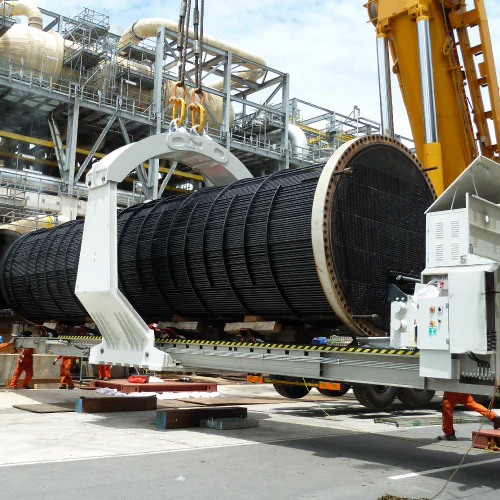
Overview of Lockout/Tagout Standards
A critical maintenance task for heat exchangers is the Lockout/Tagout (LOTO) standards formulated by OSHA. Its purpose is to eliminate possible release of energy or activation of equipment which would cause potential harm to the individual. Significant requirements include the isolation of all points of energy, the placement of a lockout/tagout device, and verification of isolation before any maintenance is undertaken. LOTO procedures must be conducted only by those persons authorized to do so, with all persons trained on the matter. Communication and paperwork must be in order, adhering to compliance and the prevention of injury of anyone present on the ground.
Implementing Effective LOTO Procedures
Compliance with Lockout/Tagout (LOTO) regulations stipulated by legislation helps to protect staff and assure the financial life of equipment. Heat exchangers mostly operate at high pressures and can operate at high temperatures hence posing a greater hazard to try to keep the hazardous energy sources under control. The heat exchanger project will begin by conducting the equipment shutdown and making it certain that all forms of energy are isolated that could potentially affect it (that means electric power, steam or refrigeration). All isolation points must be clearly identified and must be securely locked or tagged to avoid unintentional engagement.
Before gaining access to any maintenance system, energy isolation must be correctly checked and confirmed by ensuring that the system is devoid of electricity and pressure. A sufficient level of training is needed for maintenance teams and supervisors to understand the numerous different energy control points and the specific risks inherent in regulations about exchangers. Each lockout/tagout operation is documented, with every procedural step taken be on record for scrutiny to ensure that the operation carries out compliance within safety standards.
Following such procedures will have organizations protect workers from potential hazards and ensure safe, reliable operations within environments containing the mechanical equipment of heat exchangers.
Training Requirements for Personnel
A thorough on-the-job training must be carried out in the cleaning and maintenance of a Heat exchanger for the purpose of ensuring safety and effectiveness of the whole operation. Safety measures involve awareness on Lockout/Tagout (LOTO); recognition of possible risks; as well as correct operation of machinery. The worker must read and clear manual operations and safety documentation pertinent to heat exchanger so that upon completion of their training, the worker will build practical experience in repair work. Lastly, successful intervention sustained by constant safety programs can develop an enduring imperative in observing safety behaviors.
Best Practices for Maintaining OSHA Compliance
Regular Training and Safety Drills
Training OF employees is often identified by teaching them rules that are redundant and standard safety procedures. Proper training on right use of equipment and personal protective equipment, hazard identification, and recognition of standardized ways of responding to emergencies is very essential. There is required training on most OSHA related regulations, company-specific operational procedures, and in use of safety checklists aimed in reducing risk. Safety drills try out realistic conditions--fire evacuations or chemical packed spills, to ready employees to respond to an emergency without pause. It was during all training and drill sessions, whereby all the excuses of inappropriate training will not apply since they will be helping the company to produce proof of the actually required functional knowledge concerning inspection of their respective kind.
Implementing Effective Maintenance Practices
A proactive maintenance strategy is but for ensuring worker safety and compliance with OSHA regulations. For efficient implementation, an organization must institute a preventive maintenance program that keeps the equipment and systems in good operation state, from proper inspections and servicing to repair as needed; this not only ensures the equipments' safe operations but also lessens any potential accidents due to mechanical failures. Maintenance checks are fully documented to rule out blame through OSHA inspection when that occurs. Moreover, it is ever more important to stay abreast of OSHA standards for specific machinery or processes and incorporate them into the maintenance schedule. Employee training on maintenance issues identification and reporting also is effective to deliver not only workplace safety but also compliance efforts. Through their compliance with stringent maintenance regimes, and because of their subservience to establish operative OSHA regulations, they are creating an environment of safety on the one hand and significantly reducing regulatory risk on the other.
Continuous Monitoring and Improvement Strategies
To comply with OSHA along the trail, every business should necessarily consider an active system for continuous improvement. Implemented on a regular basis, workplace inspections serve to sight potential dangers or points of non-compliance. Make sure that checklists aligned with OSHA standards help evaluate the extent of inspection," discussions of Young. Have your incident reports documented so that you may identify patterns and address reoccurrences.
This is why keeping employees occupied with regular safety audits and encouraging them to communicate open-source information about their respective risk is significant. Continued training will not just keep employees up to date but will help them understand the OSHA regulations along with what is expected of them concerning safety problems. All organizations should frequently review their policies as OSHA regulations come into effect so that they may remain in compliance. Once on board, these strategies will transform work culture into a safety-first attitude, decrease risk, and sustain compliance.
Reference Sources
Selected Topics on Safety, Equipment Maintenance, and Compliance for the Cytogenetics Laboratory: Discusses OSHA's role in enforcing health and safety regulations across industries, including equipment maintenance.
OSHA Compliance Issues: Fatal Exposure to Anhydrous Ammonia in a Food Manufacturing Plant: A case study highlighting the importance of OSHA compliance in maintenance activities, including heat exchanger systems.
Standardized Repair Procedure for Failures in Heat Exchangers: Explores repair procedures for heat exchangers, emphasizing safety and compliance in industrial settings.
Operations and Maintenance Practices Recommended by Regulatory Agencies: Discusses maintenance practices aligned with OSHA and other regulatory standards.
Frequently Asked Questions (FAQs)
How does the occupational safety and health administration guideline affect the maintenance personnel who work on the heat exchanger equipment?
Heat stress occurs when the process equipment, radiant heat sources, and hot work areas' heat exposure is high enough to surpass the body's cooling capability. Heat exhaustion, heat rash, and heat stroke are all potential hazards the maintenance crew faces when they are servicing shell and tube heat exchangers or pressure vessel components in the absence of any control measures such as temperature control, ventilation, or scheduled breaks. For them, the federal OSHA and Occupational Safety and Health Administration have guidelines that have been failed to prevent heat stress, whereas these guidelines included training on signs and symptoms of heat, monitoring heat levels, hydration, acclimatization, and engineering controls to reduce the exposure to heat.
What are some likely hazards of working near pressure vessel and heat exchanger process equipment?
Maintenance of pressure vessel and heat exchanger systems involves entry into pressurized and temperature conditions with exposure to boiling and scalding fluids. Occupational diseases and other problems confronted by those workers resulted solely from exposure to occupational hazards. These potential hazards are, therefore, fire, burns, explosion; the presence of poisonous gas, vapor, liquid, or fume; and smoke inhalation, diminishing standby time, which could create a new uncontrolled fire even after the other fire has been extinguished. Digital Records Management eliminates physical and mental problems (due to temperature and environmental risks). Risk can be controlled by an ideal combination of direct and indirect changes in the hazard rating level: stimulus level and burden level.
What types of maintenance guarantee optimal heat transfer and reduce heat-induced hazards?
Good maintenance and preventative maintenance measure s ought to be given to the exchangers, including the internal cleaning of tubes, fouling removal, seal checks, and repair of corroded all-age will greatly improve heat transfer efficiency, and subsequently forestall the sudden failure of equipment with universal safety hazards. For predictive maintenance, which can be the vibration analysis and thermographic diagnostics, would serve the task of detecting conditions that could turn out to unleash heat or leaks. In-process control systems should be checked and corrected, so as to ensure that they maintain a good level of temperature control as well as avoiding their hazards.
What does Federal OSHA recommend for control of heat-related occupational hazards during periods of extreme heat?
OSHA suggests that a joint approach-interpreted as encompassing `engineering' controls (industrial hygiene) in the form of insulation, ventilation, and shielding; proper use of administrative controls to encourage sound work-rest cycles, acclimatization, and proper application of educational hydration policies; and the use of personal protective equipment (PPE) when adequate and relevant-should be in place to reduce the adverse impacts of the heat on the worker(s). The OSHA Technical Manual offers information on recognition of heat stressors, assessment of heat stress, and correction or removal with the optimum in engineered regulatory means, thus resulting in elimination of the hazard from the workplace. Designated trainings should educate employers with a focus on recordkeeping for workers, exposure assessment, and incident reporting for prevention of heat illnesses.
While carrying out heat exchanger maintenance, how would severe conditions linked to heat and electrical equipment be catered for?
Before performing any maintenance on the equipment, the energy sources should be isolated, and electrical equipment must be locked out or tagged out. Depressurization of the vessel system should be verified, and appropriate PPE should be used to guard against heat and electrical hazards. Engineering control measures are in place to lessen exposed radiant heat, and administrative control measures are in place to reduce the working period for heat exposure. Systematically checking the machinery and the equipment and adhering to the process control and safety procedure will lessen the chance that heat and electrical hazards would occur at the same time causing any injury or illness.