
 Chinese
Heat exchangers are very important parts of many industrial and HVAC systems, and they make sure that heat is transferred between the fluids efficiently. However, they are also subject to various operating problems like any other sophisticated mechanical system. The problems such as fouling, leakage, and lower thermal performance are the major factors that can disrupt processes, consume more energy, and lead to more maintenance costs if not resolved. Therefore, this guide aims to unravel the most common heat exchanger problems and give some troubleshooting tactics to keep your system functioning at its best and most dependable. It does not matter whether you are an engineer, technician, or facility manager; this article is full of helpful tips to diagnose problems quickly and improve your system's efficiency.
Understanding Heat Exchangers
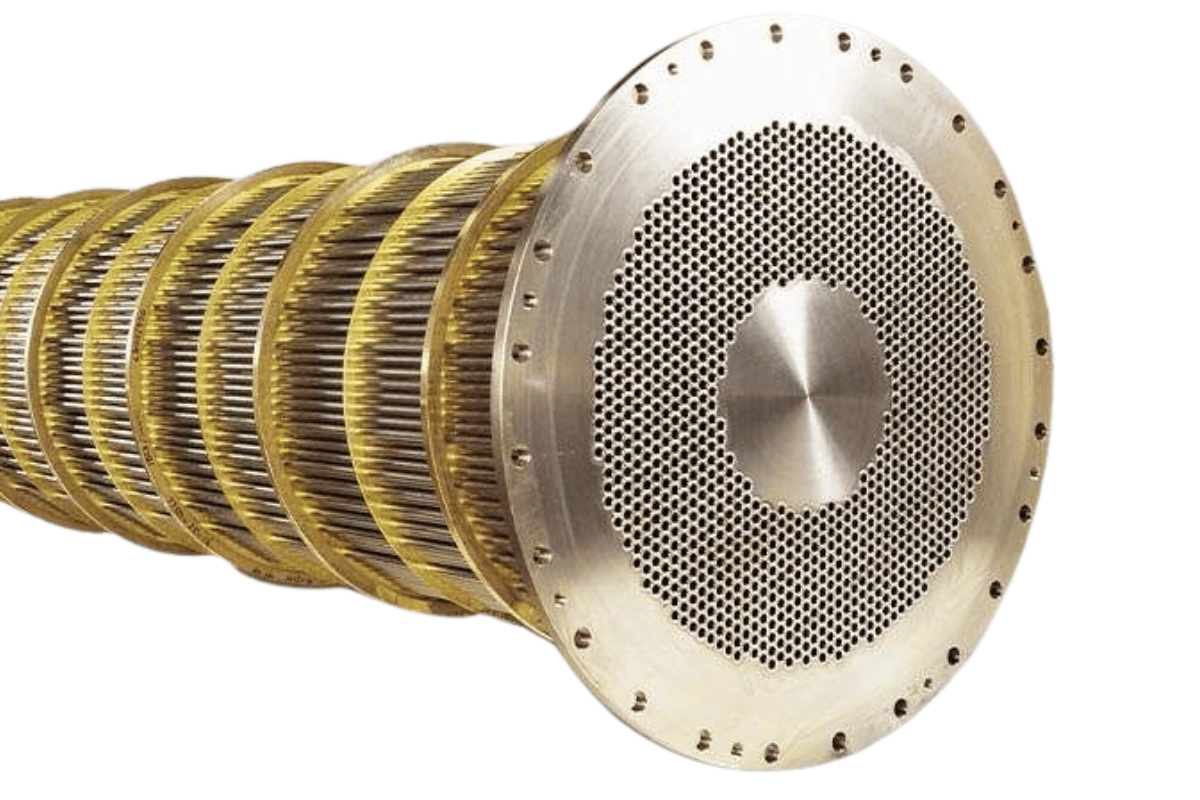
Heat exchangers are devices that facilitate the thermal transfer process between the two or more fluids but do not mix them together. They are the backbone of many industries such as HVAC, power generation, chemical processing, and manufacturing. Their main purpose is to reduce energy consumption by efficiently heating or cooling fluids. The operation of heat exchangers involves the thermal energy transfer across surfaces, usually through conduction and convection. The designs for heat exchangers are different according to the specific application, with shell-and-tube, plate, and air-cooled types being mostly used. The proper operation and maintenance of Heat Exchangers are very critical to achieving high efficiency, long lifespan, and reliable performance.
What is a Heat Exchanger?
A heat exchanger is an important piece of equipment that basically does the job of transferring heat from one fluid to another or from two fluids to one, these fluids can be either in direct contact or separated by a solid barrier, depending on the type of heat exchanger used. The transfer of thermal energy done by the heat exchangers is to the aid of industrial processes, HVAC systems, power generation, and automotive applications, etc., in keeping the temperature more or less the same thereby making the process more efficient.
Key Technical Insights
Modern heat exchangers are built using better materials like high-grade stainless steel and advanced plastics
Computational fluid dynamics (CFD) technology optimizes flow patterns for higher energy efficiency
Novel designs and materials make heat exchangers leaders in energy optimization across various sectors
How Heat Exchangers Work
Heat exchangers are devices that perform thermal energy transfer between two or more fluids that have different temperatures, and mixing is not the case, in principle. Usually, one fluid is passing through a series of metal tubes while the other fluid is coming into contact with the metal. The result is that heat is passing through the material via conduction. The latest heat exchangers are equipped with state-of-the-art engineering capabilities, such as turbulence enhancement and flow distribution optimization, to their rights for excellent heat transfer efficiency.
Among the most important features that the modern heat exchanger designs are bringing is the improvement in the compactness and the increase in the surface area to volume ratios with the help of finned surfaces and microchannel configurations. Besides, modern designs take advantage of modular construction along with the installation of smart sensors for instant performance monitoring thereby assuring perfect alignment with the operation requirements.
Main Types of Heat Exchangers
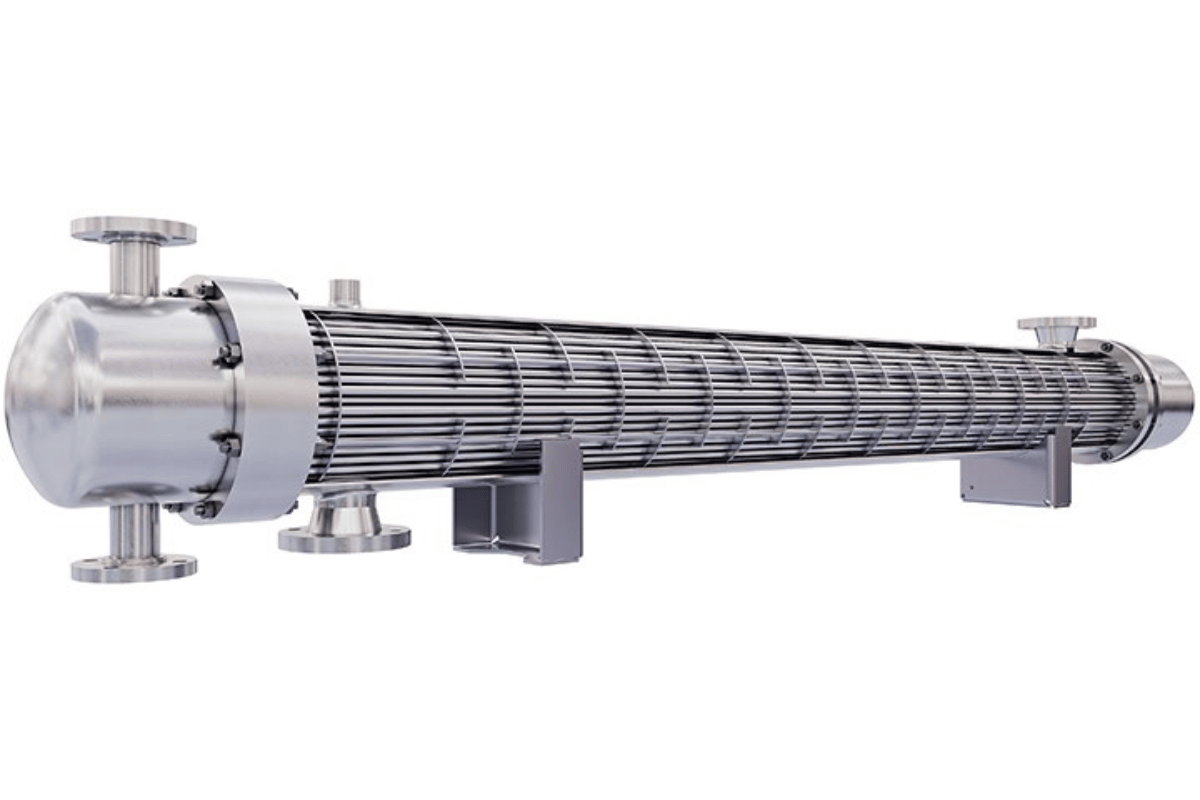
Heat exchangers fall into a variety of categories, the main ones being optimally designed for particular uses and operating conditions. The broadest classifications are the following:
Shell-and-Tube Heat Exchangers
Shell-and-tube heat exchangers are one of the most used thermal exchangers where the hot and cold fluid can be transferred via a set of tubes placed inside a cylindrical shell. The hot fluid enters and flows through the tubes while a cooler fluid is passing over the outside of the tubes within the shell, hence the heat transfer is made easy.
Common Applications:
Power generation
Chemical processing
Oil refining industry
Plate Heat Exchangers
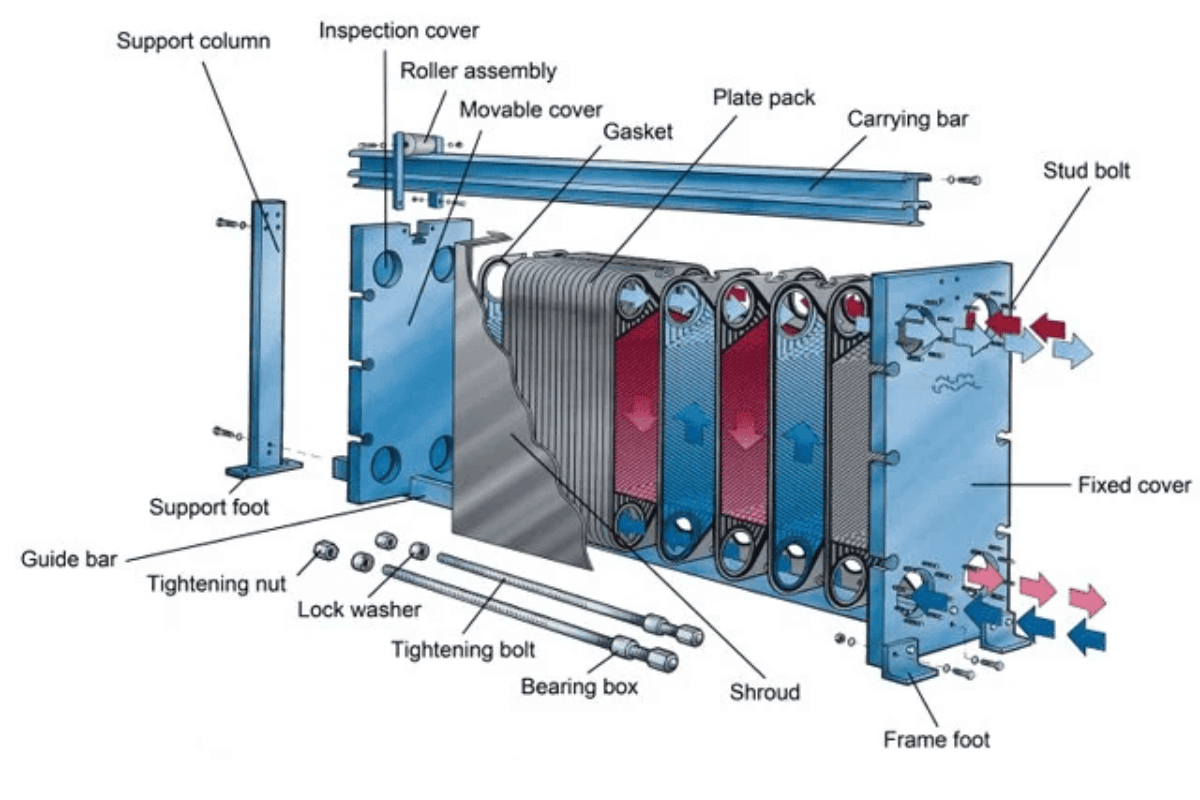
In plate heat exchangers, alternating cold and hot fluids flow through thin, wavy plates that are stacked together. The compact design gives a high surface area to volume ratio which makes them be needed in applications needing space efficiency.
Common Applications:
HVAC systems
Food and beverage processing
Air-Cooled Heat Exchangers
Air-cooled heat exchangers, designed to use the atmosphere as the cooling medium, are not dependent on water for the cooling cycle. They are perfect for hot places or regions with no water supply.
Common Applications:
Petrochemical industry
Electric power generation
Regenerative Heat Exchangers
Regenerative heat exchangers are different from the others because they do not lose heat but temporarily store it in a matrix material and then transfer it to the chilled incoming fluid.
Common Applications:
Gas turbine systems
Waste heat recovery
Double-Pipe Heat Exchangers
The operation of double-tube heat exchangers is based on an understandable principle: a small pipe is placed inside a large pipe. Fluid circulates in the pipe that is in the middle, whereas, a different fluid circulates in the ring space around that one.
Benefits:
Cost-effective solution
Simple maintenance
Spiral Heat Exchangers
Two flat plates are twisted around a central core, forming spiral channels for the movement of liquids. This arrangement facilitates self-cleaning and is a good candidate for viscous fluid or slurry treatment.
Common Applications:
Paper and pulp processing
Waste-water treatment
Common Problems with Heat Exchangers
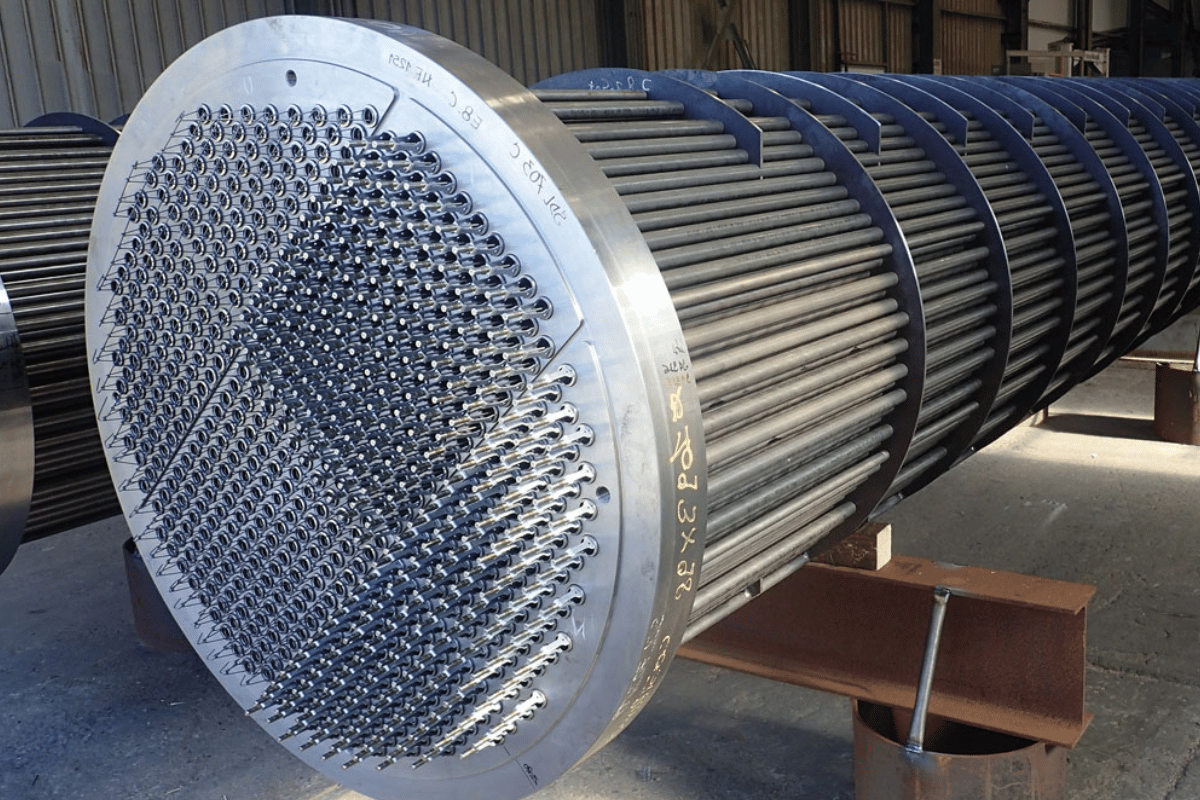
Cracked Heat Exchanger Issues
⚠️ Safety Warning
One of the major issues with broken heat exchangers is that they can lead to very dangerous leaks of fluids or gases, like refrigerants, water, or even poison gases like carbon monoxide. Thermal stress, metal fatigue, and corrosion are common causes of cracks in exchangers that deteriorate not only the system's efficiency but also the safety of the system.
Indicators of a Cracked Heat Exchanger
✓ Strange sounds during operation
✓ Visible cracking during inspection
✓ Smell of formaldehyde
✓ System not reaching the expected output temperature
If these problems are detected, they need to be fixed right away to avoid even more deterioration of the structure or safety risks. The first step is to have an assessment done by a professional technician who will be able to tell whether a repair is possible or if a complete replacement is necessary. Advanced methods, such as infrared thermography or pressure testing, are now more frequently being used for more accurate detection of cracks.
Troubleshooting Heat Exchanger Problems
Heat exchanger problems can be efficiently handled if the main symptoms are first recognized. In the case of heating or cooling not being done properly, the first thing to do is to check for fouling and clean the heat transfer surfaces if they are dirty. Then, check the fluid flow rates and make sure they are up to the design standards because obstructions or pump failures can reduce system performance.
Identifying Symptoms of Malfunction
Detecting a faulty heat exchanger's symptoms is very important in maintaining the efficiency of the system and avoiding long waits for repairs. A major sign of trouble is the reduction of heat transfer efficiency, which might be noticed through the output temperatures being not uniform or through the taking of longer times for heating or cooling to the required level.
Key Warning Signs
Indicates internal blockage or dirt accumulation
Knocking or hissing suggests leaking or imperfect sections
Color changes or stains at connection points indicate fluid leaks
Non-uniform output or longer heating/cooling times
Step-by-Step Troubleshooting Guide
1 Identify the Problem Area
Start off by identifying exactly which component or system is the one causing the irregular behavior. Use visual inspections as well as sensor data or monitoring tools, to help you efficiently locate the fault.
2 Analyze Diagnostic Data
Get and look through the real-time diagnostic data from the integrated platforms and software.
3 Cross-Reference Known Issues
The trend, documented resolutions, or updated industry standards that are relevant to the problem might come out through this method.
4 Isolate the Cause
Use analytical techniques like root cause analysis, for example, to identify what is the very cause of the problem. To validate the diagnosis, connect the abnormality that you observed to historical data or predictive modeling tools.
5 Implement Solutions
Once the fault has been diagnosed, then it is time to take corrective measures depending on the type of fault. For instance, when leaks are detected, then resealing or replacing the respective joints is the solution. Also, verify that the solution is in accordance with manufacturer's standards and modern engineering practices.
6 Verify System Integrity
Do extensive testing on the unit after repair to make sure that the problem has been fixed. Compare performance metrics against the established baselines and verify proper operation through system audits.
7 Keep Documentation Updated
Document the entire troubleshooting process including all steps taken, observations made, and solutions given. This documentation not only aids in future diagnostics but also acts as a reference for possible improvements in the maintenance protocols.
When to Call a Professional
There are situations where professional help is a must despite the variety of diagnostics and troubleshooting technical issue tools and resources at one's disposal. Some major pointers towards the direction of the technician are:
Diagnosis of Complex Hardware Failures In case the checks reveal that the hardware components such as motherboards, CPUs, or GPUs have got critical failures, these are usually needing specialized tools and skill to repair or even replace in a manner that won't cause even more damage.
Software Problems That Keep Coming Back A situation of continuous occurrence of bugs in software, crashes, and performance lags even after the full troubleshooting and updates may indicate the presence of very serious issues like corrupted system files, malware infections, or compatibility conflicts that require expert resolution.
Network Security Breaches Network security breach signs like unauthorized access, data leaks, or unusual traffic patterns are signals that require immediate professional help for the purpose of risk mitigation and infrastructure securing.
Industry-Specific Systems For proprietary or industry-specific systems like medical imaging devices, interfaces for industrial machinery, and enterprise servers, it is often the specialists with the domain knowledge who are needed to ensure compliance and proper functioning.
Compliance and Legal Requirements In the case of regulatory frameworks such as GDPR, HIPAA, or PCI DSS, professionals are required to make sure that diagnostics and modifications are done in a legal manner, thus avoiding violations and penalties.
Remember: Calling a technician at the right time not only reduces the downtimes but also saves the resort from the worst failures and hence proves the operation reliability. Always assess the risk-to-reward ratio of continuing self-imposed diagnostics against going for expert support when dealing with complex or high-stakes issues.
Heat Exchanger Maintenance Tips
🧹 Regular Cleaning
To keep thermal efficiency at its best and minimize the chances of getting blocked, perform routine cleaning of the heat exchanger surfaces to avoid fouling. Select the proper cleaning methods according to the type of exchanger and the nature of the contaminants present.
🔍 Inspect for Leaks
Routine inspections should be conducted to spot any signs of leakage of fluids, as these may point to defective seals, gaskets, or tubes which need to be replaced right away.
📊 Monitor Performance
Keep a close watch on the performance of the equipment by measuring its temperature differences and pressure drops. These measurements will help to detect any decline in the efficiency or any internal problems.
⚠️ Check for Corrosion
Inspect for corrosion on all parts, especially in areas with the application of harsh chemicals or high moisture content, and take immediate action to prevent such a situation from causing the failure of the structure.
🔧 Replace Worn Parts
Make it a practice to replace periodically those parts that wear out most easily, such as seals and gaskets, before they cause an unexpected breakdown during your operation.
💧 Maintain Proper Fluid Levels
It is very important to keep the operating fluids at the right levels and having the right quality; otherwise, the wrong fluid properties can have a negative effect on the efficiency and may cause premature wear.
Routine Maintenance Practices
Importance of Regular Inspections
Regular inspections have become mandatory in every system's life. Their significance is most pronounced in the places where equipment failure can cause high costs and concerns regarding safety and the environment. Through consistent and detailed inspections, the issues can be detected at an early stage and the preventive measures can be applied thereby curtailing the escalation of minor problems into major ones.
Top 5 Reasons for Regular Inspections
1. Early Fault Detection and Prevention
Regular inspections can help detect wear, corrosion or component fatigue abnormalities even before these lead to system failure.
2. Cost Efficiency
If equipment is regularly maintained and inspected the need for costly emergency repairs that are due to neglected maintenance is greatly reduced.
3. Operational Safety
Inspections significantly lower the chances of an accident occurring due to an equipment failure thus safeguarding both the workers and the community surrounding the plant.
4. Compliance with Regulatory Standards
Regularly carried out inspections guarantee that the installation meets both the safety and environmental regulations related to the industry and thus no fines or legal responsibilities arise nor the shutting down of operations.
5. Extended Equipment Lifespan
Correct inspections will not only prevent overuse of the equipment but will also reduce the wear and tear of the components thus prolonging the equipment life.
Maintaining Different Types of Heat Exchangers
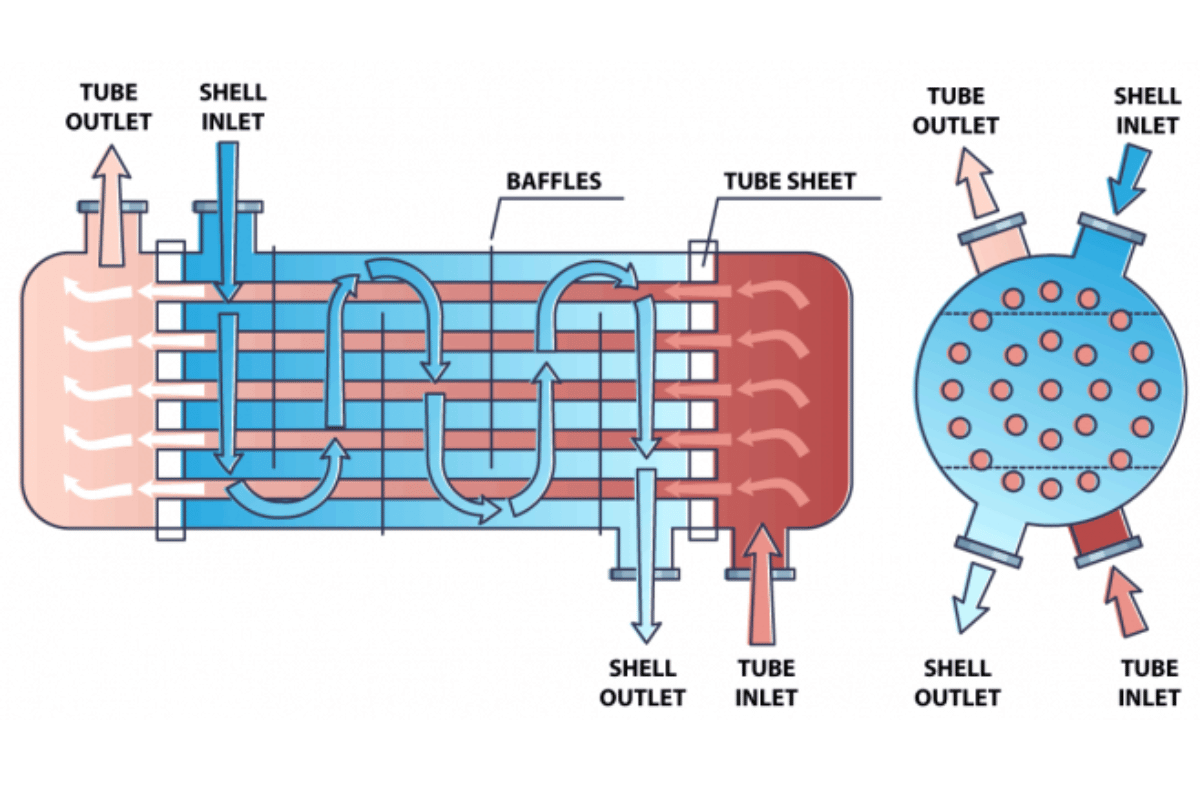
The maintenance of heat exchangers is the most important aspect that ensures maximum efficiency, avoids expensive downtimes, and extends the life of the equipment. The different kinds of heat exchangers, because of their structures and operational demands, will therefore have different maintenance procedures.
Shell and Tube Heat Exchangers
The shell and tube heat exchangers find a wide application in industrial sectors. They need regular maintenance that includes cleaning the tube bundles with mechanical or chemical methods, scaling, and descaling to prevent fouling.
Non-destructive testing (NDT) such as eddy current testing for tube integrity
Identify corrosion or cracking at early stages
Regular gasket replacement
Vibration analysis to maintain performance standards
Plate Heat Exchangers
Plate heat exchangers are required to undergo a meticulous cleaning regime wherein each plate is cleaned to get rid of scaling and other performance inhibitors. The dismantling gives an opportunity for the inspection of the plate surfaces and gaskets for wear or damage thoroughly.
Chemical cleaning methods such as passivation to restore heat transfer efficiency
Leak detection procedures
Gasket replacement when necessary
Air-Cooled Heat Exchangers
Cleaning of the fins and surfaces is a regular maintenance practice for these exchangers to make sure that airflow is not obstructed. High-pressure air or water can be employed to effectively remove dirt and debris.
Check fans, bearings, and drive systems for mechanical defects
Periodic lubrication of fan motors
Vibration sensor calibration
Double Pipe Heat Exchangers
The maintenance of double pipe heat exchangers is concentrated on cleaning the inner and outer pipes. Pipes that are fouled need to be subjected to either chemical flushing or pigging in order to maintain the efficient heat transfer.
Weld inspections
Pressure testing for leak-free operation
Spiral Heat Exchangers
The spiral heat exchangers take up less space but cleaning and maintenance are not easy due to the spiral passages. Cleaning methods, whether mechanical or chemical, are commonly used to remove the blockages made by scaling.
Careful visual inspection of spiral surfaces for wear or erosion
Testing for tightness of outlet channels to avert leaks
Best Practice: Maintaining these heat exchangers in accordance with the guidelines set for them will help the operators to enjoy high operational efficiency, lower energy costs, and an increased life span of the equipment. The use of predictive maintenance tools and continuous condition monitoring greatly facilitates this process by supplying data-oriented insights for the effective guidance of the maintenance actions.
Innovations in Heat Exchanger Technology
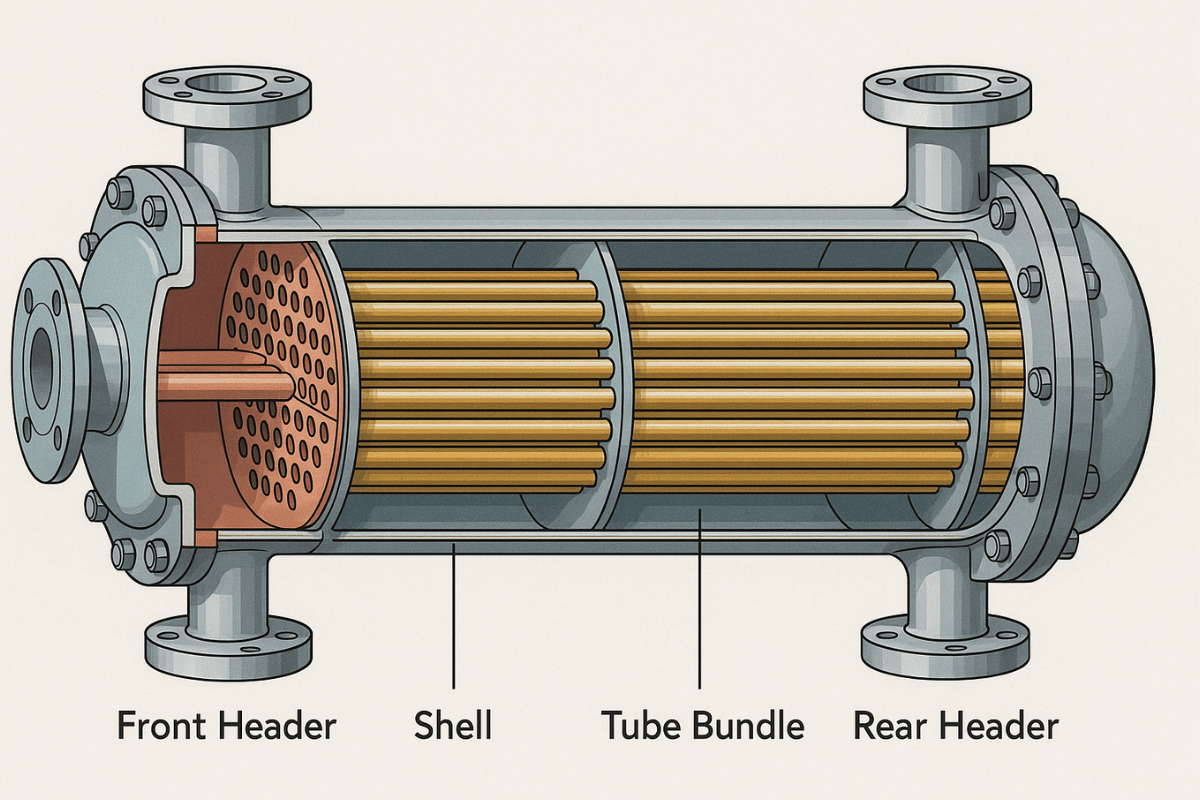
The main objectives of heat exchanger technology advancements have been to increase thermal efficiency, minimize energy waste, and prolong material life. Cutting-edge technologies like the incorporation of microchannel heat exchangers, which have small footprints and excellent heat transfer, are becoming increasingly common. The employment of novel materials such as graphene and corrosion-resistant metals has allowed even the toughest operating conditions to stay on the upper side of performance and at the same time doubling the period of use.
Advancements in Plate Heat Exchangers
The performance and efficiency of plate heat exchangers have been considerably improved through the recent advancements, which have thus made the devices very important in the modern industrial applications. The development of high-performance gasket materials and better plate geometries has been one of the main factors for the considerable heat transfer with very low pressure drop.
Recent Technological Improvements
Easier installation, scalability, and maintenance
Optimizes flow distribution and thermal performance
Survive extreme temperatures and corrosive environments
Heat Recovery Solutions
Heat recovery systems are important for energy efficiency improvement in various industries and commercial applications. Heat recovery systems serve to take the waste heating produced in a process and repurpose it, something that would normally be lost and go into the environment. This reclaimed heat can be used for, for example, the prewarming of feeding air, water, or other process streams, and thus it causes a reduction in the consumption of primary energy sources.
How Heat Recovery Systems Benefit Energy Efficiency
Cutting-edge systems like regenerative and recuperative units use advanced materials and CFD-optimized designs to achieve maximum thermal transfer efficiency while also keeping losses to a minimum. This way not only operational costs are reduced, but also the carbon footprint is greatly minimized making it in line with worldwide sustainability targets.
Future Trends in Heat Exchanger Designs
Demand for superior energy-saving, miniaturized designs, and low-impact options has a significant role in determining the direction of new trends in heat exchanger designs. One of the major breakthroughs is to leverage additive manufacturing (3D printing) technology to fabricate intricate heat exchanger structures that not only improve heat exchanger performance but also save on consumables in terms of weight and material.
🖨️ Additive Manufacturing (3D Printing)
This method allows for the creation of unique designs perfectly aligned with the use case, hence enhancing the thermal performance of different sectors. 3D printing enables the fabrication of intricate heat exchanger structures that improve performance while reducing weight and material consumption.
🔬 Nanomaterials and Advanced Coatings
The use of high-grade nanomaterials and coatings as thermal conductivity and corrosion resistance enhancers is gaining attention. Surfaces treated with graphene are becoming popular because of their capacity to absorb overwhelming thermal loads while at the same time reinforcing the longevity of the heat exchanger parts.
🤖 Artificial Intelligence & Machine Learning
The participation of artificial intelligence in the form of machine learning algorithms helps to ensure that performance is constantly optimized, thus providing predictive maintenance and reducing the risk of downtime.
☀️ Hybrid Systems with Renewable Energy
The incorporation of heat exchangers in hybrid systems, as in the case of their conjunction with renewable energy sources such as solar thermal panels, gives rise to a more intelligent and eco-friendly solution. The interlinking of these hybrid systems not only makes it possible to achieve a higher level of efficiency but also meets the urgent demand for the use of zero-carbon technologies.
The Future of Heat Exchangers
These trends, in combination, not only change but also elevate the role of heat exchangers in contemporary industrial and energy systems, thereby conforming to the increasingly stringent regulatory standards as well as the sustainability initiatives.
Frequently Asked Questions (FAQs)
Q: What is fouling and how is it diagnosed and mitigated?
Answer: Fouling refers to the growth of unwanted material on heat transfer surfaces, which means that the surface gets insulated and the flow of heat becomes more resistant. This has the effect of degrading thermal performance severely and might cause an increase in pressure throughout the machine.
Monitor the overall heat transfer coefficient (U-value) for a gradual drop
Note if the pressure drop across the heat exchanger is getting higher
During maintenance shutdowns, inspect for buildup of sludge, organisms, or dust particles
Mechanical Cleaning: Physical removal using high-pressure water jets, brushes or tube cleaners
Chemical Cleaning: Specific chemical solvents designed to dissolve fouling material
Prevention: Maintain high fluid velocities and install filtration systems upstream
Q: What is the difference between fouling and scaling?
Answer: Scaling is typically associated with fouling, however, the latter exclusively refers to the crystallization of dissolved mineral salts (such as calcium carbonate or magnesium sulfate) on the transfer surfaces due to changes in temperature or the salt's solubility limit being reached. A very hard rock-like layer is created.
Very quick reduction in thermal efficiency at the hot end of the exchanger
Large increase in tube-side pressure drop
Water analysis revealing high hardness or mineral content
Descaling: Apply acid-based cleaning solutions (e.g., inhibited hydrochloric acid)
Water Treatment: Softening, demineralization, or anti-scaling agents
Temperature Control: Restrain operation to favorable temperature ranges
Q: What are the indications of corrosion and how is it prevented?
Answer: Corrosion is the physical and chemical degradation of metal parts due to their interaction with the process fluids through chemical reactions. This results in the metal getting thinner, forming pores, and eventually leading to either leaking or mixing of the fluids.
Fluid sample tests showing increased metal ion concentration (iron, copper, nickel)
Visual examination revealing pitting and wall thickness reduction
Unexpected leaks or mixing of the two process fluids
Material Selection: Use appropriate construction materials (stainless steel, titanium, copper alloys)
Anodic Protection: Employ sacrificial anodes or cathodic protection systems
Fluid pH Control: Maintain pH within recommended range
Q: How do I leak-check and fix a heat exchanger?
Answer: Leaks may happen outside (to the atmosphere) or inside (in the form of cross-contamination between the hot and cold fluids). The most common causes are failure of the gasket, tube rupturing, and loose connections.
Internal Leaks: Changes in fluid composition or color (oil in cooling water)
Pressure Testing: Test each side separately to locate internal breaches
External Leaks: Look for fluid dripping from gaskets, joints, or ports
Gasket Replacement: Check integrity and replace old seals
Tube Plugging/Replacement: Plug or replace leaking tubes
Tightening: Torque all bolted connections to manufacturer specifications
Reference Sources
The following are authoritative documents that provide comprehensive information about heat exchanger problems and troubleshooting:
A Step-by-Step Guide to Troubleshooting Your Heat Exchanger
Presents the 10 most common problems including fouling, corrosion, scaling, cracking, leaks, fluid contamination, and mechanical damage.
Heat Exchanger Problem Causes and Troubleshooting
Deals with the problems of fouling, which is the deposition of unwanted materials on heat exchanger surfaces, and other operational difficulties.
A Comprehensive Guide to Troubleshooting Heat Exchangers
Mentions the issues of fouling, leaking, corrosion, scaling, and thermal stress, while suggesting respective solutions.
Troubleshooting Common Issues in Heat Exchanger Performance
Brings to the forefront the problems of heat transfer efficiency and flow rate as main issues, while offering practical troubleshooting tips.
Your Comprehensive Heat Exchanger Troubleshooting Guide
Specifically deals with fouling and scaling problems and offers ways to address them in heat exchangers.
Need Help with Your Heat Exchanger?
Following the maintenance measures outlined in this guide will help your heat exchanger live longer, reduce downtime, and deliver optimal operational performance. Whether you're dealing with fouling, corrosion, or efficiency issues, early detection and proper maintenance are key to system reliability.