
 Chinese
Industrial processes are highly reliant on the operation of heat exchangers to sustain performance and because they efficiently transfer heat. Unfortunately, in the long run such systems may suffer some functional difficulties for example fouling, corrosion or wearing which diminish their performance. More reasons for regular tube bundle inspection are quite unseen. The purpose of this blog is to address the techniques of tube bundle inspection and maintenance and to provide information relating to this increased its life span, reduces downtime and cents operational cost. Indeed, this manual will give some interesting and relevant advice so as to help practitioners, particularly engineers, technicians and plant managers in overcoming maintenance problems and staying always at the tip. Keep reading to find the best and proven methods of staying in-house production aids operations management.
Understanding Tube Bundles in Heat Exchanger Systems
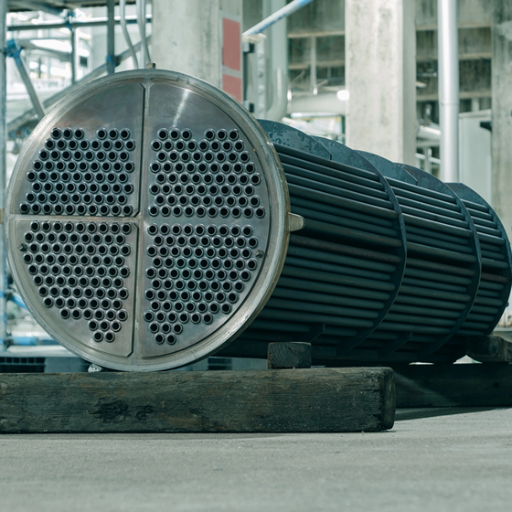
Heat exchanger systems utilize tube bundles which are key elements within the system, comprising a series of tubes intended for heat transfer between two fluids without any intermixing. One of the fluids goes inside or through the tubes, while the other one remains outside them facilitating heat transfer. These bundles may be found in a fixed or removable arrangement, subject to system necessities and the need for repair or maintenance. Well-managed tube bundles will provide the best possible heat transfers, cut down on power usage, and preserve the operation of the system. Tube bundles undergo routine tube bundle inspection best practices to lengthen the durability and avoid major operation disturbances.
Components of a Heat Exchanger Bundle
There are different parts that commonly make up a heat exchanger bundle. These skeletons include:
Tubes
The fluid flows through tubes -these are the main components. Tubes can be of different types and, most importantly, can be copper, stainless steel or some other material depending upon application and need of heat transfer.
Tube Sheets
These sheets carry the tubes last in case of the bundle - one on each side - and separate the tubes in contact with different fluids.
Baffles
They work as the fluid deflectors across the tubes and help in improving the heat transfer rates with the tubes and also strengthen the tubes.
Shell
This is not included within the bundle but it contains the tube bundle and allows additional shell side fluid to flow across the tubes.
Headers or End Caps
These are installed at the ends of the tube bundles to control the fluid entering inside the pipes and the one that is emitted.
These elements collectively function to guarantee adequate and proper heat exchange of the two fluids in question. The right combination of these parts with maintenance is very important in ensuring excellent output.
Functions of Tubes in Heat Exchangers
Tube bundles constitute the heart of heat exchangers, especially when two process streams are to be separated in the heat exchange process contained within the shell. In most designs, tubes are made of high heat conduction materials, which could be stainless steel or copper. This enhances heat transfer across the tubes through conduction. These fluids flow inside the tubes as the tubes are coaxially aligned; and outside the tubes, there is a different fluid that comes and exchanges heat.
For heat exchange to be efficient, there is also more than just a flowing of fluids involved; there are configurations, plain, finned and corrugated which all affect the efficiency of the tubes. As can be in the case of finned tubes with an increased external area due to fins, the rate of heat transfer is also higher. Also, a resistance to mixture convection between the two liquids is offered by the tubes and is necessary, especially where cross-contamination is a problem to be avoided. These packets include the rules of separation of the two liquids.
The bearing capacity of every tube within a heat exchanger is influenced by a number of factors, such as the materials used in construction, the fundamentals of hydrodynamic, as well as the operations and those influence the longevity of the equipment: heating and cooling, air conditioning, and even energy in some cases.
Common Defects in Heat Exchanger Tubes
⚠️ Corrosion
This can be described as a process that occurs over a period of time, in which the tube material undergoes the chemical reaction and interaction with the fluid, in such a way that the material is either thinned or pitted.
🔧 Fouling
The build-up of any form of scales, dirt, or living objects inside or around the tube preconceived limit in a manner that would limit heat transfer effectiveness.
💧 Erosion
The process where the surface of a tube is consumed by erosion often due to the high-speed or Abstyrent fluid flowing past the surface.
🚨 Leaks
Breakage in the tubes such that fluids come into contact with one another or become mixing, thus compromising the efficiency of the system. Such damage may be due to mechanical force, the material becoming worn-out, or corrosion.
🔒 Tube Blockage
Refers to the closing of the pathways for flow due to foreign elements such as debris, sludge or fouling thus affecting the heat exchanger functioning.
The Importance of Tube Bundle Inspection
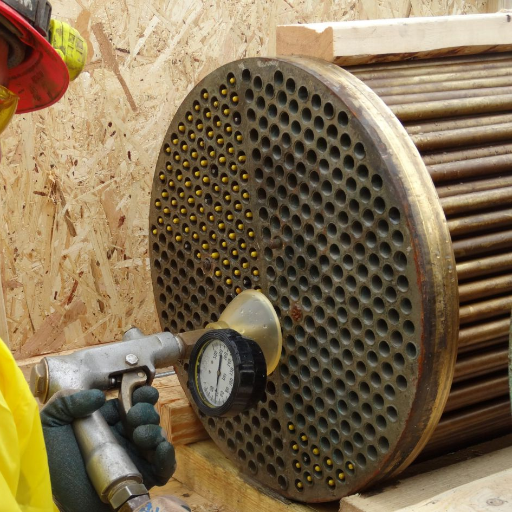
The tube bundle inspection of heat exchangers is an important maintenance activity for safety and smooth operation. Tube bundle related problems like corrosion, erosion, leaking, and blocking can be easily detected and timely mitigations can be undertaken such as repairing and replacement of tubes, thereby reducing service interruptions. Examination prolongs service life of the equipment as optimal work is maintained and worst case scenarios are curbed. Such controls are a necessity in any industrial setup in order to facilitate normal functions.
Maintaining Safety Standards
Tube Bundle Inspection Best Practices are enhanced by observing several safety precautions together with legislative requirements. Personnel must wear suitable personal protective devices that can limit contact with hazardous materials. All precautionary measures corresponding to opening, cleaning and inspecting tubes have to be observed by the workers and the equipment kept in serviceable state. Moreover, updating of knowledge of personnel and their training and certification on regular basis is very important. Implementing practices such as these promote the improvements within the industries in terms of not only the efficiency but also the working procedures within the facilities.
Ensuring Compliance with Industry Regulations
Specific standards, recommended by ASME, OSHA, and other regulatory bodies, or any thermodynamics related regulatory authority, need to be observed by various industries for tube bundle inspections in order to be in line with the regulations, which have been developed for those industrial processes. The regular intervals at which heat exchangers should be checked and the ways in which they should be inspected and all the applicable safety measures necessary to define these base standards are known and have been prescribed. These audits and documentation are required such that adherence to the laws is accomplished which is done when inspection and maintenance activities are recorded and well present. Furthermore, there is a need to enlist the services of inspectors who posses the relevant skills and abilities to carry out the inspection as taught, therefore avoiding any inaccuracies or blame shifting. Such initiatives are put in place to ensure that industries follow regulations and protect the employees and the equipment as well.
Impact on Operational Efficiency
Tube bundle inspection best practices play an important role in maximizing the efficiency of a plant as they help uncover problems at an early stage which lessens the chances of surprise downtimes. Also, prompt inspections contribute to the upper heat transfer efficiency, hence, the production process and energy consumption are not compromised. Moreover, costs are saved by early repair of detected faults with the consequent increase in equipment life expectancy. It is a strategy that optimizes scheduling of maintenance activities to plan and allocate resources in a better way hence facilitating the operations and ensuring consistency.
Best Practices for Tube Bundle Inspection
Creating an Inspection Routine
Create a comprehensive maintenance plan that incorporates regular physical examination of equipment to minimize contamination and repair costs.
Adopt Modern Techniques for Inspection
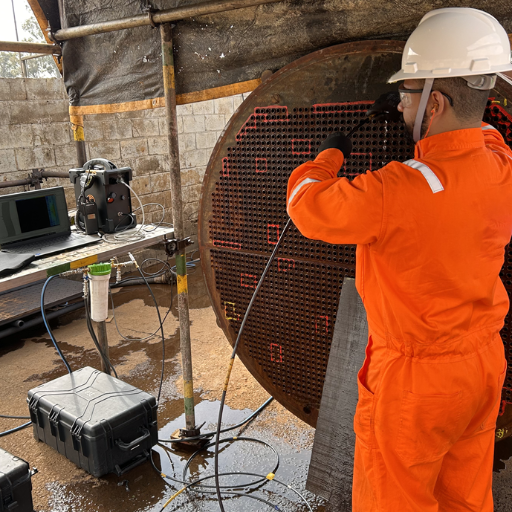
Resort to advanced non-destructive means such as ultrasonic inspection, eddy current inspection, or infrared thermography, to identify and locate the areas of concern as well as corrosion and fouling.
Conduct Comprehensive Pre-Inspection Cleaning
See to it that the tubes are adequately cleaned for proper assessment of the state of the tubes and eliminating chances of missing out on any vital problems.
Organize Results Correctly
Prepare as well as maintain inspection reports to recognize patterns of deterioration, assist in projecting the cause and frequency of repairs, and thus, assist in the final decision-making process.
Bring On Board on Practiced or Knowledgeable Partners
Incorporate properly trained and skilled staff or reputable organizations that can provide this expert service and can conduct the inspections properly and interpret the data accurately.
Incorporate Means of Predictive Maintenance
Incorporate forecasting policies and early warning systems to enable the projection and response on time before the situation gets out of hand.
Safety will be enhanced, efficiency maintained, and the lifespan of tube bundles prolonged by the inclusion of these practices.
Inspection Techniques and Methodologies
Tube bundle inspection best practices are noteworthy as they comprise an assessment of possibilities of damage using non-destructive testing (NDT) techniques and visual inspections. The techniques most often employed involve:
👁️ Visual Examination
Here the procedure involves observation of the outermost surfaces of the pipe bundle and where is allowed to reach base material and looking for corrosion, cracks, or any other damages.
⚡ Eddy Current Technique Used (ECT)
Using the principle of variation in the electrical conductivity of some non-ferrous tubes, ECT can be used extensively to find cracks, lower thickness, and defects.
🔊 Ultrasound Testing (UT)
In this approach, the usage of sound waves is needed to check the thickness of walls and any damages existing inside.
💧 Dye LQ Penetration Inspection (DPT)
This is a surface inspection process in which the liquid penetrant is combined with the developer and checked for surface discontinuities or otherwise.
🧲 Magnetic Particle Inspection System (MPT)
This process is designed for ferrous components, wherein the magnetic particle testing (MPT) adopts magnetism and ferrous powder in order to identify surface as well as near surface defect of the components.
💦 Hydrostatic Testing
The bundle is filled with water or a similar non-compressible liquid, and delicately pressurized, looking for indications of leaks.
Using these methods regularly, helps in ensuring accurate defect assessment, preventing breakdowns that happen out of the gall due to them greatly minimizing it.
Effective Cleaning Methods for Tube Bundles
💧 High-Pressure Water Jetting
This strategy employs an intense force of water to clear away dirt build-up or scaling on surfaces of tubes. It works well without posing much danger of causing damage to the tubes.
🧪 Chemical Cleaning
Chemical removal, on the other hand, requires certain preparation of active chemicals to show the deposit such as rust, scale, or some other impurities. It is especially advantageous in cases of deposits that are extremely persistent or those that are inside.
🔧 Mechanical Cleaning
This method involves the use of brushes, scrapers, or turning tools to remove some of the hard deposits found on the surfaces of the tubes. This ensures that all the tubes are well cleaned especially where there is a lot of clogs.
♨️ Steam Cleaning
Steam cleaning is where cleaning is done using steam at very high temperatures, to take out and clean away dirt, grease or soils. It is an alternative that is friendly to the environment and usable for non sticky cleaning.
Proper methods of cleaning need to be applied in a systematic manner for enhanced integrity, decreased wear and tear of the tube bundles, and presence of productivity.
Using Advanced Inspection Tools and Technologies
While it comes to Tube Bundle Inspection Best Practices, I tend to make use of state of the art implempenet coloring complex machines and techniques. For instance, eddy current inspection enables me to discover deficits like fractures or rusting iron tubes without any fracture. In the same spirit, thermal examination via infrared scanning is used to see thermal deviations which often point blockage or leaks. Also, instruments like sections and scopes facilitate the examination of sections inside the pipes where access is impossible. With such up-to-use inspection practices, one can analyze the situation in a timely manner and enhance the performance besides reducing the down time.
Optimizing the Inspection Process
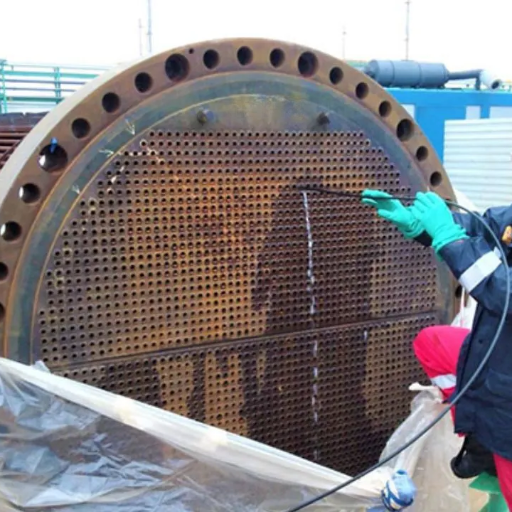
The best way to improve tube bundle inspection is through the application of more sophisticated NDT methods – eddy current, infrared, borescope methods, etc. There is a need for a shift in such methods as these do not involve opening up the equipment, thus destructive. Proper planning, regular maintenance schedule, and using automation tools could help increase the efficiency of the profiling. There is also a need to focus on proactive management using the analyzed data and correcting behavior patterns. Making these improvements helps to enhance the durability of the equipment as well as the accuracy and precision of the work.
Developing a Comprehensive Inspection Plan
Any effective tube bundle inspection plan should include well defined objective and scope of the tube bundle inspection itself. The evaluation should begin with the description of the tube bundle in relation to the size, material and services offered. Inspections should be systematically selected and planned in accordance with the equipment use, available recommendations from the manufacturers and best practices for the industry.
One should there apply proper methods of inspection like visual testing, ultrasonic testing or eddy current testing based on the state and the reach of the tube bundle. As well as due purposes, it should be ensured that all measurements are made with standardised equipment and by competent specialists. In addition, all available information about inspections previously performed should be used for critical areas of the equipment and to carry out the inspection.
Lastly, incorporate the results into a more viable predictive maintenance framework which enables early detection of issues and makes the necessary repairs. Tube bundle inspection best practices include developing a very systematic strategy which has preparation, inspection, and review steps for adequacy and efficiency.
Best Practices for Inspecting Wall Thickness
Inspecting the wall thickness of various tube bundles is required to ensure their internal structure and operational efficiency are not compromised. Thereby, to develop the required actions and derive appropriate results, it is necessary not to forget about the following principles:
Do Spread the Efficient Use of Tools
Use the latest in modern technology, ultrasonic testing samples to inspect wall thickness and all measurements are carried out inside the tubes. Such equipment does not require destructive tests and provides reliable results even in harsh conditions.
Keep Inspection Equipment Calibrated
Calibrate the inspection equipment on a regular basis and in accordance with applicable standards to maintain the measuring accuracy. It is most important to perform calibration before every inspection so as to avoid potential errors.
Clean the Tubes Properly
Some debris, corrosion, or fouling that can affect the integrity of the measurements might stick onto the tube walls and should be removed since is done prior to performing the measurement.
Follow the Step by Step Procedure
Follow the instructions for inspection of wall thickness so that all parts of the wall are inspected in a structured manner. This helps in deviation detection immediately.
Environmental Control
Pay attention to temperature, pressure and operational conditions when carrying out inspections since these parameters have an effect on measurements and the behavior of materials.
Record Data and Patterns
Maintain comprehensive records on the inspections performed for the purposes of assessing the wear or thinning of the walls' trends over time. This information is useful in forecasting potential problems and organizing preventative maintenance.
Put Your Staff Through Training
The right people should be trained and certified to participate in inspections in order to ensure proper education on current techniques and correct diagnostic assessments.
As part of the rational maintenance organization, such practices allow the operators to perform early diagnostics of wear out preventing spoils of unexpected failure and potentially prolonging the service life of the tube bundles, which in turn eliminates cost outlays and improves performance of equipment.
Challenges in Tube Bundle Inspection
Tube inspection can be associated with a number of problems that enhance inaccuracy and the duration required to carry out an examination. To begin, many of these devices are too small in size or to access which makes it hard to conduct a visual examination. Corrosion, scale, and fouling among other forms of bore obstructions result in difficulties in inspection by hiding the defects. Worse still, with the use of inappropriate and more often than not backwards equipment there is usually an incomplete assessment if one can call the rodents that. Next, arises another problem; that the personnel to carry out the inspection and interpret the results wisely are most of the time not present in the said areas. In conclusion, many facilities also face the problem of how to conduct a seamless inspection without causing commotion, which to a great extent calls for action plans and logistics. Overcoming such obstacles takes careful consideration, sophisticated equipment and experience crews.
Prolonging the Lifespan of Tube Bundles
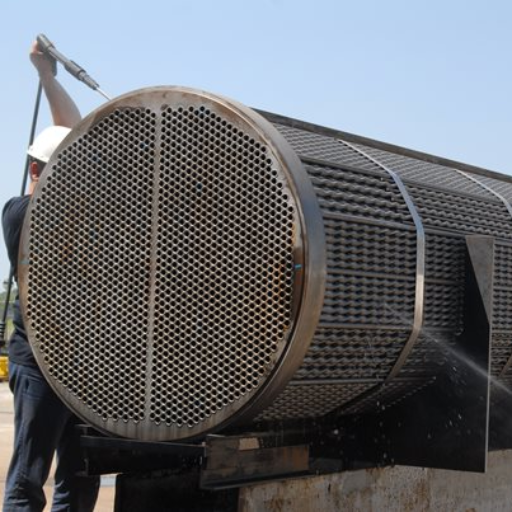
To ensure that the tube bundles last as long as possible, it is necessary to adopt regular cleaning and maintenance practices to avoid buildup and corrosion. The advanced methods available for tube bundle inspection will assist in seeing the damage, and repairs can be arranged accordingly at the earliest. Further, the use of durable and high precision elements which are not susceptible to wear and erosion surrounded in the assembly will remain longer. Tube bundles can do their work safely without enhancing stress beyond what the design can sustain if control of the temperature and pressure is proper. In conclusion, outsourcing maintenance to experienced personnel and following Tube Bundle Inspection Best Practices can prolong the life of the tube bundles.
Regular Maintenance and Inspection Schedules
Inspecting and maintaining tube bundles using appropriate procedures is a sure way to guarantee efficient use of the equipment as well as its life span. The inspections need to be carried out at regular intervals so that corrosion, fouling, and mechanical damage are noticed early. The combination of visual inspections and non-destructive examinations such as ultrasound shall enable detection of initial damage before it's too late. Cleaning, either chemical or mechanical, is another procedure that should be planned in accordance with working conditions to avoid clogging or fouling. All the inspection as well as maintenance works need to be documented which helps in gauging the performance and the possible failure paths. Following regular maintenance patterns helps reduce down time due to break down of tube bundles as well as enhances the performance of the tube bundles under the desired conditions.
Innovative Techniques for Tube Preservation
🛡️ Tube Bundles Protection
The purpose of using high-grade protective coatings is mainly to protect tube bundles from happening corrosion or wearing. Such coatings serve as a blockage from any technical moisture, chemical components, or extreme heat.
🔬 Fouling Inhibitors
Surfaces with anti-fouling measures such as special treatments or hydrophobic coatings prevent buildup of deposits seldom over time.
📊 Monitoring Systems
Interfacing with emdhyia in sensors and monitoring systems can help in taking economic advantage by detecting the parameters of working conditions and possible problems earlier rather than later.
⚙️ Usage of Corrosion Resistant Materials
The construction of tube bundles can include materials such as stainless steel or titanium, which are more durable in use, which is beneficial especially under harsh conditions.
🌊 Cleaning Methods
There are methods as high pressure water jetting or ultrasonic cleaning to clean the tubes so carefully that no harm is caused to the tubes.
Using the strategies, you can greatly improve the lifespan and performance of the tube bundles along with cutback on the expenses towards maintenance and prolonged downtimes.
Training Technicians for Effective Inspections
In order to ensure that inspections of tube bodies are carried out atomically, and the outcome is that the inspections are conducted – these inspectors need to be trained well enough. The major factors that should be tackled in training are as follows:
Conceptualizing Tube Bundle Inspection Best Practices
A course for technicians about the basic elements and the purpose served by tube bundles where they will also get familiar with the materials of which tube bundles are made as well as the problem spots will be included in training.
Tools for Tubes
The smartest way to evaluate any process is 'hands-on experience' hence practice on the use of tools like borescope, ultrasonic testing machine, magnetic particle and Eddy current testing will be advantageous.
Common Defects Resistance
Technicians are also required to know how to attend to possible problems like worn out surfaces, corrosion, fouling and cracking.
Protection Barriers
Detailed training on safety measures, particularly in ensuring safe performance of technicians when inspections are carried out in dangerous conditions or with harmful materials, is also necessary.
Centered around these key areas, inspectors are capable of performing inspections efficiently, incident free, and with a focus on upcoming maintenance demands. Review and certification programs, in this regard, enable individuals to stay relevant with new inspection methods.
Reference Sources
Tube Bundle Replacement for Segmental and Helical Shell and Tube Heat Exchangers: Experimental Test and Economic Analysis - This paper provides insights into the thermal design and economic considerations for tube bundle replacement.
Comprehensive Strategies for Addressing Tube and Tubesheet Joint Leaks in Shell-and-Tube Heat Exchangers - This research examines strategies to address leaks in tube bundles and tubesheet joints, offering practical solutions.
Experimental Evaluation of Pairs of Inline Tubes of Different Size as Components for Heat Exchanger Tube Bundles - This study evaluates the configurations and performance of tube bundles in heat exchangers.
Failure Analysis of Heat Exchanger Using Internal Rotary Inspection System (IRIS) - This paper discusses the use of IRIS for failure analysis and inspection of heat exchanger tubes.
Frequently Asked Questions (FAQs)
What are the benefits of a periodic tube bundle inspection, specifically for heat exchanger maintenance?
Periodic tube bundle inspection is crucial for maintaining heat exchanger efficiency and safety. These inspections act as the first line of defense, highlighting the earliest stages of fouling, corrosion, or tube wear before disastrous malfunctions occur or heat transfer is significantly reduced. Practically, early awareness will allow plant flexibility with scheduled maintenance, thus avoiding a need for instant shutdowns. Inspection will also keep equipment up and running by allowing further preventative maintenance. When the system is manufacturer fingerprintly analized and based on industry standards, such as ASME, inspection is guaranteed effortless. In short, true, early and alert inspections give you the confidence that your operations are operated correctly, saving on crude so that efficient operations will save on your operational costs.
What inspection methods are recommended for tube bundles in heat exchangers?
There are several specialized methods that provide the most detailed assessment of the tubes in a heat exchanger. Affording such is the use of non-destructive testing methods (NDT), such as ultrasonic and eddy current inspections, allow detailed evaluation of wall thickness, pitting, and hidden corrosion. Visual inspection is the first and often the most important step that can be assisted in a lot of cases with borescope applications for areas of hidden access. Dye penetrant or magnetic particle inspection could then be used for the sake of finding any surface cracks or material flaws. The most appropriate inspection methods selection depends on the tube material, accessibility, and type of service procedure. This in turn will ensure a more thorough assessment by ensuring safe operation supported by well-informed decisions.
In what ways do inspection best practices help to prevent tube bundle corrosion and fouling?
It plays an important proactive role in preventing corrosion and fouling in heat exchanger tubes by following inspection best practices. Such inspections get deposited, or spots are seen at an early stage, which can take cleaning or rectification action to avoid further damage. Predictive maintenance is feasible with such early monitoring, which reduces operational risks further. The heads of the tubes are inspected for coatings or treatments that are placed to prevent fouling. As part of the programmed inspections, an operator can maintain equipment-for-duty and intervene timely to some activity. In so doing, they can facilitate and ensure the transfer of heat through the tubes without any compromising risk of entailing the reliability of the equipment.
How do the heat-excanger tubes significantly influence the general tube-bundle functioning?
These tubes of heat exchange are a core foundational feature which is very much needed in successfully transference the heat between the fluids in tube bundles, hence the importance of their integrity. determine the choice of materials used, tube placement and diameter, because they have direct consequences for the effectiveness of these heat exchangers, affecting both thermal efficiency and pressure drop. Any decrease leads to a fall in efficiency, and very much raises the progress of operational failure-rate and the problem; e.g. thinning, cracking, or fouling are all detrimental. Periodical inspections will render input proportion to clean or operationally sound pipes, while maintaining various levels of best practices in maintenance, minimizes the degradation of tube-bundle performance, and extends the life of the heat-exchanger system.
What are the benefits of a proactively planned tube bundle inspection strategy toward ensuring effective equipment operation over the years?
The scheme of protection, mainly based on routine checks rather than having anticipatory methods of predicting possible future findings borne from past operating history, materials analysis, etc., will thus hold predictively good in the use of predictive tools, appropriate maintenance records, and scheduled preventative maintenance. This all works to avoid unexpected downtime and/or emergency repairs. In the long run, however, the whole mechanical function may depend on its long-term reliability as problems are fixed at the very onset, preventing escalation of many minor problems into one major issue or failure. Without a proper maintenance inspection, a heat exchanger will fail prematurely and undesirably.